
In a world where mainstream social media platforms receive a lot of backlash for curtailing the audience’s freedom, a silent revolution is brewing: the rise of decentralized social media platforms. With the promise of offering freedom of expression and control over your data, these platforms are challenging the traditional social media platforms.
They are, therefore, considered to be the future of social media. This article will explore how these decentralized social media platforms are rising and their benefits, drawbacks, and future outlook.
What Are Decentralized Social Media Platforms?
Decentralized social media platforms operate without a centralized command or entity. Rather than relying on a single organization to store and manage data, they use a distributed network of peers or nodes. This structure means that ownership and control are usually spread to users instead of being concentrated on a single organization.
This offers a paradigm shift in how social media works. It uses decentralized technologies like blockchain to improve content moderation, user interaction, and data control. When well used, decentralized social media platforms can distribute control, power, and decision-making among users. This can, in turn, result in a more user-centric and democratic environment.
While traditional social media platforms have enhanced information sharing, communication, information, and development of online communities, they also hold a centralized authority that controls user data and sets the platform's rules. Decentralized social media platforms aim to correct this by changing the power dynamics. Instead of a single entity controlling ownership and data, this is distributed across networks. The servers of these platforms are decentralized worldwide instead of being controlled by a single entity.
How Decentralized Social Media Platforms Work
Not all of them work the same way. Some, like Steemit or apps built on DeSo, store posts on a blockchain, where a post can't be changed once it's added. Others, like Mastodon and Bluesky, don't use a blockchain at all. They run on open protocols that let many independent servers talk to each other.
Decentralized networks use peer-to-peer technologies rather than a centralized social network. The extensive node's network usually runs independently, ensuring no service interruption. Since there is no central owner, no single company can ban someone from the whole network. Each server or app still sets its own rules, though, and can remove people who break them.
Benefits and Drawbacks of Decentralized Social Media Platforms
While decentralized social media platforms have their benefits, they also come with their challenges. You need to know the benefits and drawbacks when choosing such a platform.
Benefits
Some of the benefits of using decentral social media networks include:
Better User Control
As noted earlier, decentralized social networks usually operate from independent servers instead of centralized platforms as is the case with third-party social media platforms. This gives users better autonomy and control when setting up social networks. They also determine the rules for acceptable behaviors and content.
Security and Privacy
Decentralized social networks use distributed networks usually spread across various geographical locations. The system consists of interconnected servers that provide a reliable and robust server. Many of them also use cryptography to protect data, and there is no single company collecting everyone's data to sell ads.
Lack of Censorship
Since no entity controls the decentralized platforms, the chances of censorship are low. Content is usually moderated by the people who run each server or community, not by one company, so there is less central control over what people can say.
Money Making Opportunity
On some decentralized platforms, users earn crypto tokens when they create content, curate existing posts, or engage with their community. Keep in mind that the value of these tokens can rise and fall quickly. They, therefore, offer innovative ways of benefiting from the networks even when they don't run ads or enjoy sponsorships.
Drawbacks of Decentralized Social Media Platforms
Here are the drawbacks of these platforms:
Learning curve
Decentralized social media platforms may be more complicated if you are used to traditional social media platforms. They require technical knowledge to set up and understand concepts such as blockchains, nodes, and server administration.
Growth challenges
Many of the decentralized social media platforms can be hard to scale. With many users joining, maintaining the network's performance is the role of the users managing the network. It also becomes hard to make decisions with the growing number of users. When the data is distributed across too many servers, this can cause synchronization and latency challenges.
Inconsistent user experience
Many decentralized social media platforms have their features, rules, and interfaces. That means new users may be discouraged by the inconsistency in the features and advanced customization options compared to the centralized networks that come with some popular designs.
Lower user interest
Many social media users either do not know of decentralized platforms or have limited interest in them. That means their usage level is still relatively low compared to platforms like Facebook, Instagram, or X. The benefits of decentralized social platforms can be hard to understand, and they do not offer the convenience and simplicity of traditional centralized platforms.
Top 7 Best Decentralized Social Media Platforms
Now that we understand the pros and cons of decentralized social media platforms, here are the top seven options:
Diamond App
Diamond is a decentralized social media network running on the DeSo blockchain whose goal is to give users control over their social identities and their ability to monetize content and grow their influence. The app uses the creator coins for each social media network, with the coins representing the influence and reputation of the user in the network. The coins can be used to buy, sell, and hold various profiles, allowing users to invest in their favorite creators.
Diamond app operates like traditional social media platforms, complete with a social feed where the most popular posts from your favorite creators can be seen. Users can add their posts and profiles and send DMs to other creators. The platform also has a tipping system, allowing creators to send cryptos to other creators and earn money from their content.
Mastodon
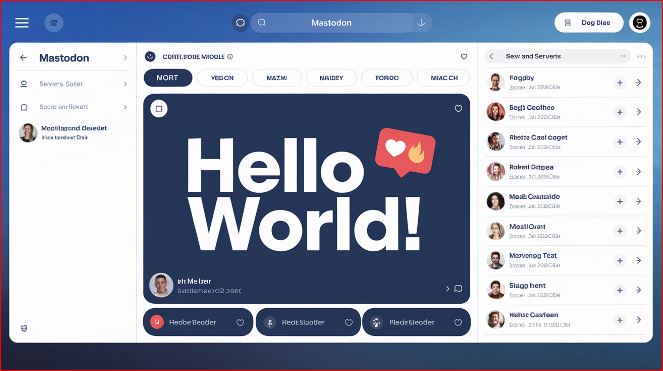
Often called an alternative to X, Mastodon is an open-source microblogging platform with independent servers managed by independent users. While users are grouped according to the server, they are allowed to interact with one another across different networks. Posts (once called toots) can have up to 500 characters on most servers.
The platform allows users to tag one another, share different media, and follow accounts. They can also boost sharing content across the networks, like reposting. As part of the fediverse, Mastodon allows users to reblog, post, and engage across other social media platform services. Like other social media platforms, Mastodon allows users to share content in text, images, GIFs, and videos.
The platform's feed appears chronologically, and users can determine what they see on their timeline. The platform allows users to join the servers centered on a particular interest or topic.
Minds
As an open-source Web3 social media network, Minds is a decentralized platform that is a great alternative to traditional platforms. The network has a token known as the Minds token that users can use to perform different tasks on the platform, such as boosting the content, supporting other creators, and even upgrading to premium memberships. The tokens run on the Ethereum blockchain, so transactions are publicly recorded. Minds Token enables users to enjoy the contributions and monetize their social media posts.
As of 2023, Minds had over 6 million registered users. The platform enables users to:
- Directly communicate with one another.
- Create content posts.
- Follow one another.
- Join a community.
- Engage with posts through comments, reactions, and shares.
- Foster connections and discussions.
The platform cultivates free speed and is a good place to network with communities that have different interests, such as politics, cryptos, art, activism, and crypto. Apart from boosted posts, it has no ads. You can also switch them off by upgrading to a paid membership.
Lens Protocol
Lens Protocol launched in 2022, built by the team behind the Aave crypto lending app. It is an open-source Ethereum-based blockchain platform that allows users to create profiles and content. The social media platform can be integrated with Web3 applications, allowing monetization.
Each profile is an NFT that the user keeps in their own crypto wallet. Lens started as an invite-only beta, but since February 2024 anyone can create a profile.
Audius
Audius is another decentralized social media network made specifically for musicians, providing them with a unique, artistic-centric experience. You can share, upload, and monetize your music on decentralized social media. This ensures musicians have control over their content and can earn through tips, fans, engagement, and streaming royalties. Smart contracts handle all royalty payments, ensuring they are distributed to artists within the guidelines.
Audius has reported millions of monthly users. Users can interact on the decentralized social media platform through:
- Music streaming.
- Favorite tracks
- Creation of playlists
- Following artists
- Reposting
Users can also build communities and collaborate through networking, remixing, and messaging features. The platform allows direct engagement between users and artists, enabling artists to get feedback and build a community. It has a native coin known as Audio, which can be used for staking and participation in artists' rewards, platform governance, and artist rewards.
SteemIt
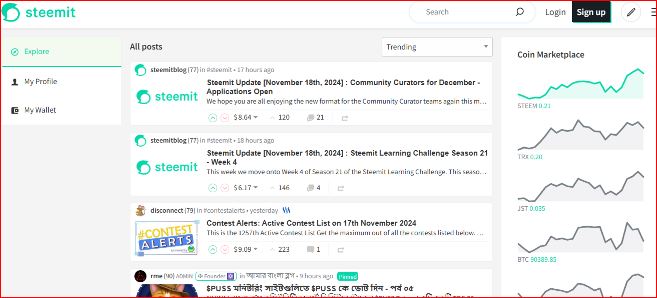
As another blockchain-based social media platform, Steemit uses the Steem blockchain, allowing users to earn STEEM dollars when creating or curating content. Developed on the Steem platform as the flagship app, it rewards users with Steem depending on their comments.
Launched in 2016, Steemit is one of the oldest decentralized social media platforms. Users vote on comments and posts to decide the payout of the posts. They are also given curation rewards when they find and upvote content.
Bluesky
Bluesky began in 2019 as a project inside Twitter and later became an independent company. It runs on the AT Protocol, an open system that lets you take your account to another provider and pick the feeds you want to see. It opened to everyone in February 2024 and passed 20 million users that November. You can read more in our article on Bluesky and its new era of social networking.
The app looks a lot like X, with short posts, replies and reposts, and it works on phones and in the browser. Unlike Steemit or Minds, it doesn't use a cryptocurrency.
The Impact of Decentralized Social Media Platforms on Marketers
As noted earlier, many decentralized social media platforms aim to give users autonomy. Moving away from traditional systems will affect the brand’s approach toward social media. Here are several ways in which decentralized social media will impact marketers:
New Monetization Methods Will Become Common
With decentralized social media creating new monetization avenues, more brands will embrace them. A digital currency that enables businesses to achieve customer loyalty and resilience will be needed. Brands may also need to implement new cryptocurrency steps to increase engagement.
Using Organic and Community-first Social Media Strategies
A decentralized social media platform will influence how marketers approach organic and paid posts. Depending on how things work, marketers may experience an explosion in organic methods due to having a better ROI than traditional ads. Marketers will be searching for an audience-centric approach. However, because it is less scalable, the management of a decentralized community will need more people on the ground to expand their reach and achieve similar results.
Decentralized social media will also improve community-first methods focusing on the platform. Marketers will now focus on making high-quality content that is malleable and resonates with decentralized social media platforms.
Better Crisis Communication Plans
The fediverse offers the benefits of resisting censorship. However, this also means that it could act as a misinformation avenue. That may require marketers to use proactive frameworks to prevent misinformation. Extensive crisis communication will also be needed to help them protect their brands.
Decentralized Social Media Trends
So, does decentralized social media have a future? Recent trends show that it is growing due to concern over platform censorship, user control, and data safety concerns. This shift can be proven by several statistics and trends, such as:
- Privacy concern. A 2019 Pew Research survey found that 79% of Americans are concerned about how companies use the data they collect about them. Decentralized platforms can be a good alternative, providing them with better control of their data and minimizing the risk of exploitation by data brokers and third-party advertisers.
- Content ownership. In traditional social media networks, content creators are compensated but not the user. This is unlike decentralized platforms such as SteemIt, where the user owns and monetises content. Market researchers expect blockchain social media to keep growing for years, mostly because of this ownership and payment model.
- Platform censorship. Another reason for the increased adoption of decentralized social media platforms is the concern over censorship. With Facebook, YouTube, and X being accused of arbitrarily banning users, many users seek censorship-resistant platforms. Surveys keep showing that many Americans don't trust the big platforms to moderate content fairly. As community-driven governance institutions, decentralized platforms provide a more transparent way of moderating content, reducing control and bias. Not every blocked post is censorship, of course. If you simply cannot upload photos to Facebook, it's usually a technical problem you can fix yourself.
Why Decentralized Social Media Brings a Paradigm Shift for Creators
There are chances that creators will be skeptical of the new networks, and for some good reasons, especially for those looking forward to monetizing. One of these is that they still have a low follower count. It makes sense to choose a primary platform depending on the large potential audience.
For instance, TikTok is a fast-growing social media platform with over 1.5 billion users. However, it doesn't make sense to put all your eggs in one basket. The U.S. ban fight showed how real that risk is. In January 2025, the app went dark for about half a day and stayed out of the U.S. app stores for several weeks. Creators who only had a TikTok audience could have lost it overnight.
On some decentralized platforms, the risk of losing your audience is smaller, because networks like Mastodon and Bluesky let you move your account and followers to another server. With this new reality, there may be a paradigm shift for creators. Instead of thinking of themselves as LinkedIn or YouTube creators, they might begin to see themselves as video or image creators. That means their content will always be theirs, and their audience will always be theirs.
How Decentralized Social Media Platforms Are Creating a Refreshing Community
One of the key features of decentralized social media platforms is that they are usually more focused on discussions and communities instead of the attention economy that drives traditional social media platforms. With decentralized platforms such as BlueSky, allowing users to create their algorithm and Mastodon, which does away completely with the algorithm, these networks are proving to be a great alternative to traditional forums such as Instagram, where you must understand the Instagram algorithm.
Of course, building a community is still essential, but meaningful engagement with comments or commenting on someone else's comments is still a powerful way of getting noticed.
Why the Future of Social Media is Hybrid
Since decentralized social media platforms have their challenges, it's unlikely that they will completely replace mainstream platforms soon. However, with many years of steady growth and innovation, they are also not likely to go anywhere. What is more likely is that we are likely to move toward a hybrid system of traditional and decentralized media. This is especially noticeable each time the traditional platforms change their algorithms, leading to disgruntled members.
Additionally, niche communities tend to thrive better on decentralized platforms. This provides users with alternatives without the need to abandon the marketing strategies for traditional platforms like Instagram. While decentralized social media platforms are disrupting the industry; it is still not time to delete your social media account. It can also be an excellent choice to maintain that Mastodon account.
Mainstream platforms are also moving toward the fediverse. Meta has connected Threads to it, so Threads users can share their posts with people on Mastodon.
Understanding the Fediverse
When thinking of decentralized social media platforms, it's essential to understand the fediverse. This refers to several interconnected servers for networking and other activities such as web publishing and blogging. As federated networks that are independently hosted, the servers can interact.
This is one of the major differences between traditional social media platforms like Facebook and Instagram and decentralized platforms. For instance, Twitter users can only send and receive messages within the platform and not to Facebook, as the two platforms aren't integrated there. On the other hand, users in federated networks can engage with one another.
A good example of how federated networks work is emails. While Google has different rules from Yahoo, Gmail rules don't apply to Yahoo users and vice versa. However, they still allow users to send from one platform to the next. That’s the same way federated social media networks work.
How to Leverage the Best Decentralized Social Media Platform
To make the most out of a decentralized social media platform, here are several tips:
Create Engaging Content
After choosing the right platform, you can focus on creating content that resonates with your target audience. Remember that each platform has a unique demographic and features. Therefore, you need to research and tailor your content accordingly.
For instance, posting long-form content on Mastodon is not advisable as it is designed for short messages. Instead, if you want to create a detailed post on your latest product or company history, you can do that on Steemit.
Just like on the traditional platforms, you should focus on creating top-notch content that is informative, visually appealing, and interesting. Additionally, you should focus on posting regularly while responding to your audience’s messages and comments.
Have a Compelling Profile
When people find your content interesting, they will often visit your profile to learn more about you and your brand. This is why it is necessary to ensure that your profile on the decentralized social media platform is complete and current. Ensure that you have added a description of your brand and a link to your blog or website.
If your decentralized social media profile is to position you as an expert in your industry, include the necessary credentials and your expertise area. Ensure that you have a cover image and a profile picture.
Connect with Various Communities
A key benefit of decentralized social media platforms is that it often comes with a vibrant community with a particular interest. You can make the most of the feature by participating in the relevant community, sharing opinions, offering support, and asking questions. You need to create a community if you want to come out strong on the decentralized social media platform while increasing your credibility and trust.
Conclusion
Decentralized social media platforms offer a good alternative to traditional social media networks. They have an advantage because they are usually decentralized, meaning no single company decides what members can say. If you are searching for a good decentralized social media platform, consider one of the above options. We recommend you also read our guide on how to boost your TikTok following.


