A common mistake that creators on TikTok make is to create videos and then spend a lot of time watching the views. While there is nothing wrong with that, the TikTokers who grow quickly are those who invest time in watching what is working on their preferred platform and what isn't. The best way of doing that is through a competitive content analysis, which is a key element of the wider TikTok competitor analysis.
When conducting a TikTok competitive content analysis, one of the key elements you should check is their content strategy. Since the content is a key factor that impacts the success of your TikTok account, competitive content analysis can provide insights into the kind of content that works well on the social media platform and the kind that doesn't. In this article, we provide a detailed guide on analyzing the content strategy of your competitors on TikTok.

What is TikTok Competitive Content Analysis?
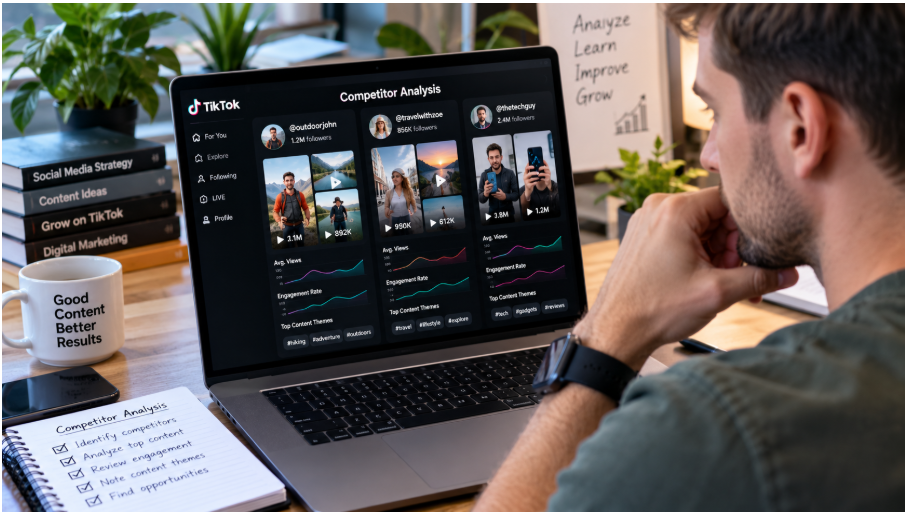
TikTok competitive content analysis involves analyzing the videos of your rivals to get insights into their posting strategies and audience engagement. This also provides insights into their content formats, use of trending elements, and hooks, etc. You can then use these insights to enhance your own content on the platform and outperform the competitor.
Why Conduct TikTok Competitive Content Analysis?
As compared to other social media accounts, TikTok's algorithm treats new accounts fairly well. That means even when you have zero followers, your TikTok videos can still reach millions of viewers as long as the content shows some strong engagement signals. This shows that your content strategy is more important than your history on the platform.
By analyzing your competitors' content strategy, you can understand the content that is already generating visibility signals. When done well, a good TikTok competitive content analysis will provide you with insights into the kind of content that is effective in your niche, the topics bringing the highest number of comments, and the posting frequency that will work well. It will show the content gaps, where the competitors aren't covering content, etc. It is, therefore, part of using audience insight to create better content.
How to Conduct TikTok Competitive Content Analysis
When conducting a TikTok content gap analysis, follow these steps:
Understand Your Competitor
Start by creating a list of your competitors, as these are the accounts you will need to outrank. To effectively do that, you should analyze the SERP according to the target keyword. You can use keyword research tools to analyze your competitors.
When considering the competitors, you can categorize them according to:
- Direct competitors. These are the competitors targeting the same keyword and selling an exactly similar product or service.
- Indirect competitors. These sell a different product or service from you but target the same customers.
- Newcomers. These are competitors targeting similar keywords to yours.
Therefore, you should now have a list of competitors according to category.
Analyze Your Competitors' Content Strategy
After getting a list of competitors, you can now visit their content to see the kind of videos they post. You should pay attention to:
Content Themes and Pillars
This refers to the recurring subjects and topics that your competitors are creating content on. They often consist of 3 to 5 major topic themes that ensure their channel remains consistent rather than competitive. They help them organize their ideas into a bucket list, guiding their content creation so that they can consistently serve their audience with content that meets their needs and brand goals.
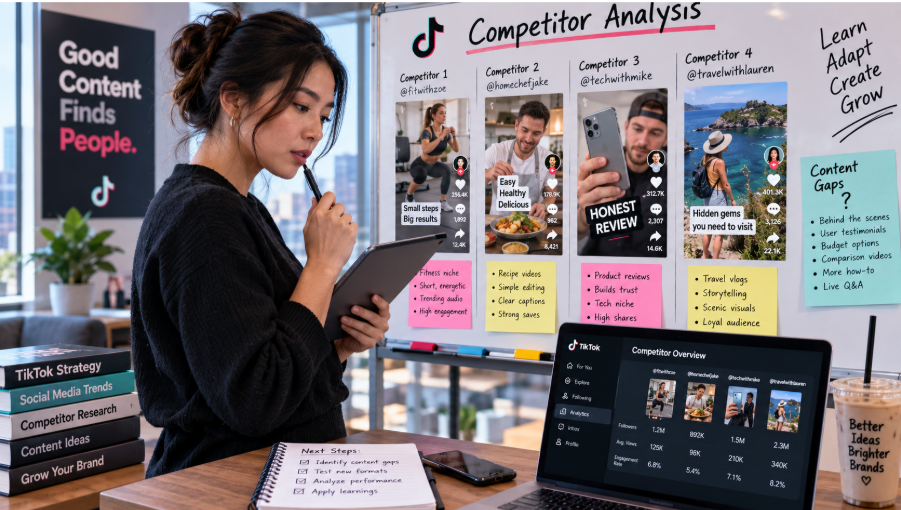
Pay attention to their last 10 to 20 best-performing videos to discover the subject buckets that keep recurring and ensure that these are categorized according to formats such as skits, tutorials, and user-generated content. You can use the insights to reverse-engineer the hook, the pacing, and the CTA to discover if there are any gaps not covered.
Check the best-performing videos of your competitors to see the one driving the highest number of views and engagement. Consider the content theme represented by the content, whether product demos, comedy skits, tutorials, or heartfelt stories. When you categorize your competitors' posts into pillars, you can get insights into the content format that drives the highest engagement, such as trend challenges, customer testimonials, and product showcases. This can provide insights into those you didn't cover before and provide ideas for the content category your audience loves in the niche.
Video Format and Style
Are your competitors using original audio, trending audio, humor, challenges, UGC, BTS content, etc.? Are they creating video or photo carousels? What length are their TikTok videos? Are they creating long-form videos or audios that are up to one hour long for deeper storytelling?
Posting Frequency
Consider how frequently your competitors post. Do they do so three or four times a week? Do they create content daily or sporadically, or is their posting schedule consistent? Pay attention to the time and day of the week when they post. You might discover a pattern, such as them seeing success when they post in the evening hours or during weekends.
When you track your competitor’s optimal posting time and peak engagement, you can decide on the right posting schedule. For instance, when you realize that most of the competitors are gaining traction on Sunday evening, it can be a good hint that this is when your audience is mostly active.
Caption and Hashtag Strategy
The TikTok discovery stream uses captions and hashtags to determine the content to show to users. Therefore, consider the hashtags they are mostly using, particularly on their key content. Are they using trending hashtags? Are they just sticking to a single niche? Pay attention to the key hashtags that are bringing them high engagement. This can provide insights into the trends and communities you can pay attention to.
Pay attention to how your competitors caption their videos. Are these in the form of emojis or questions, and do they add CTAs such as follow us for more tips? These can be important elements that drive engagement.
Feature Usage
Check whether the competitor is using TikTok features such as trending sounds, filters/effects, polls, or stitches. For instance, you can discover that your competitors are creating duets or are using trending sounds in a creative way. When checking the sound, consider whether they prefer the latest sounds/songs, a voiceover, or original audio. This is a key factor, as the use of trending audio helps to increase discoverability.
Pay attention to the effects and sounds that appear commonly in the best-performing competitor videos. Remember to check if they are using the latest feature of TikTok, as the platform rewards accounts that adopt these features early enough. Check if the competitor is experimenting with new features such as Q&A and interactive features, thereby helping to drive engagement.
Video Quality and Style
Pay attention to the video length that your competitors are creating, whether these are 15 seconds or 3 minutes. Are they heavily editing the videos, or are they using casual and raw videos? Are the shorter clips generating a higher watch time, or are their audiences sticking with the long videos?
Pay attention to whether the competitors are adding subtitles and text overlays to increase attention. Check if their hooks are strong enough and appear within the first three seconds. These are key factors that can impact video performance. When you discover that the top-performing competitor videos always start with a question or a bold hook, consider using the same tactic.
Analyze the Result
Once you have gotten data on your competitor's content, you can now analyze it in several sections.
These are:
Recurring Pattern in Content Formats
Determine if there is a recurring pattern you noted in your competitor’s best-performing videos. For instance, you might discover that the top 3 best-performing videos you analyzed were all tutorials; it is a sign that this is the content format working for your audience.
If you realize that the best-performing videos of one competitor were all leveraging trends and were getting 5 times more views than the regular videos, this shows this is the kind of trending content.
Hook Analysis
Check your 10 most-viewed videos of your competitors and see if there is a recurring pattern. For instance, do the videos lead with a question, begin with a surprising statement, or a relatable solution? Do they start with their outcome? When you find the hook that seems to work best for your audience, you can easily tell which content is likely to resonate.
Topic Gaps
Check the topics that your competitors seem to be regularly covering, as these reflect an opportunity. If you find that accounts are all covering home workout tips but none talk about workouts for expectant mothers, that means there is a content gap. You can create a video in this area.
Quality of Engagement
A common mistake that creators make is to assume that a high number of views means the content is performing well. However, it's important to track metrics that really matter, such as comments, shares, and saves. When doing that, pay attention to the view-to-comment ratio. For instance, if a video has 50K views and 25 comments, the genuine engagement is lower than another with 25K views and 50 comments. TikTok values comments, and this can be a sign of content that resonates with audiences.

Implement Your Findings in Your Marketing Strategy
Now it's time to implement a data-driven content strategy. You can use several tips to do that, such as:
- Use the data. Leverage the data on the web to find the best-performing content topics and formats in your niche.
- Systematically test the hook. Use the data you identified in our previous steps as your starting point. You can then create 5 to 10 variations of your content ideas, each with different hooks, to determine the best-performing one and the combination with the highest completion rate.
- Stay ahead of trends. Check the TikTok Creative Center to get insights into the trending hashtags and sounds each week. The accounts gaining the most from the trends are the ones that participate before a trend peaks.
- Leverage content gaps. Take advantage of the content gaps you identified to create a number of videos on the topic. This will position you as the thought leader in that topic, helping you stay ahead of the competition.
In Conclusion
One of the major factors that will impact the success of your TikTok account is the content. When you create good content that resonates with your target audience, you can easily go viral. The good news is that you don't have to start fresh. You can conduct an analysis of your competitors' strategies to get insights into the kind of content that will resonate with your target audience.