While TikTok Shops offer an unmatched opportunity to sell directly to your target audience, it can be tough trying to drive sales. That is why successful TikTok Shop marketing strategies require careful planning, audience research, and analysis of competitors on TikTok. With a good competitor analysis for TikTok Shop, you can uncover the winning strategies that TikTok Shops are using to drive sales.
It can provide you with insights into your competitors' products, pricing models, and the type of videos they use to drive sales. Since TikTok combines content with commerce, a competitor analysis will help you uncover the successful strategies and avoid some common pitfalls. In this article, we guide you on how to conduct a successful competitor analysis for TikTok Shop.
What is Competitor Analysis for TikTok Shop
A competitor analysis for TikTok Shop involves tracking and evaluating the sales performance of other brands, their promotional content, and product positioning to identify the winning products, ad spend by the competition, and even broader market trends. It therefore provides a well-defined method of understanding how sellers on the platform convert customers, drive traffic, and generate revenue.
However, a good competitor analysis for TikTok Shop looks at more than just the content. It also considers the operations and commerce. This is essential, as a competitor may be creating an average video but winning customers through their pricing policy, shipping speed, and the many exemplary reviews.
TikTok Competitor Data on Analytics
The good news is that TikTok Shop will provide a wealth of competitor data, as long as you know how to find it. You can see this data on:
Listing and Product Signal
You can get important insights into any product listing. This can include data on pricing, reviews, ratings, discounts, and the delivery period. This data not only provides the details but also the performance. For instance, a competitor can have a higher rating and many exemplary reviews, which can be an indicator of good conversion. If they offer regular discounts, it can show they are aggressive in their pricing strategy. When you combine the strategy with a review of their TikTok Shop title optimization, you can get a better understanding of their positioning in their shop.
Benchmark and Category Insights
You can find the TikTok category benchmark under the TikTok Seller Center. This can provide insights into their overall TikTok Shop performance, speed, and cancellation rate. You can check the category average to compare with your fulfillment performance. For instance, when you discover that your competitor has a fast shipping rate, they are likely to have higher visibility than you.
Leveraging TikTok Analytics Data for Competitor Insights
The analytics on your TikTok Shop can also provide important insights into your campaign. You can use it to track your conversion rate, source of traffic, product performance, and GMV. However, you can only use it to see your own data and not that of competitors, so the solution is to read signals. Pay attention to the volume, posting frequency, engagement, and pricing.
Using Tools for Competitor Analysis
To get more detailed data, you can use third-party tools. These can offer important insights into their products, trends, and Shop performance that would have been more difficult to track without specialized tools. Again, due to the limitations of TikTok, the tool may not provide complete data. You will need to manually track:
- Top trending products
- Creator activity
- Competitor content
- Content hooks
- Pricing patterns
- Product demand
- Category growth
Steps in Conducting Competitor Analysis for TikTok Shop
When conducting a competitor analysis for a TikTok Shop, follow these steps:
Determine Your Competitors
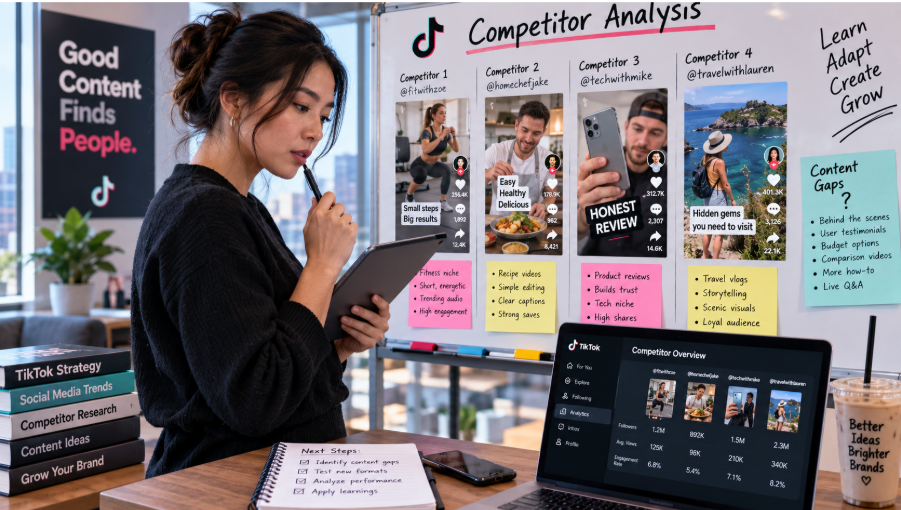
You will need to start by finding five to ten brands that are your direct competitors, selling similar products, or targeting the same audience. Since TikTok relies a lot on impulse buying and community, the real competitors are more than those brands selling similar products but competing for the same audience and even affiliate marketers' attention.
You can use several tips to discover the competitors:
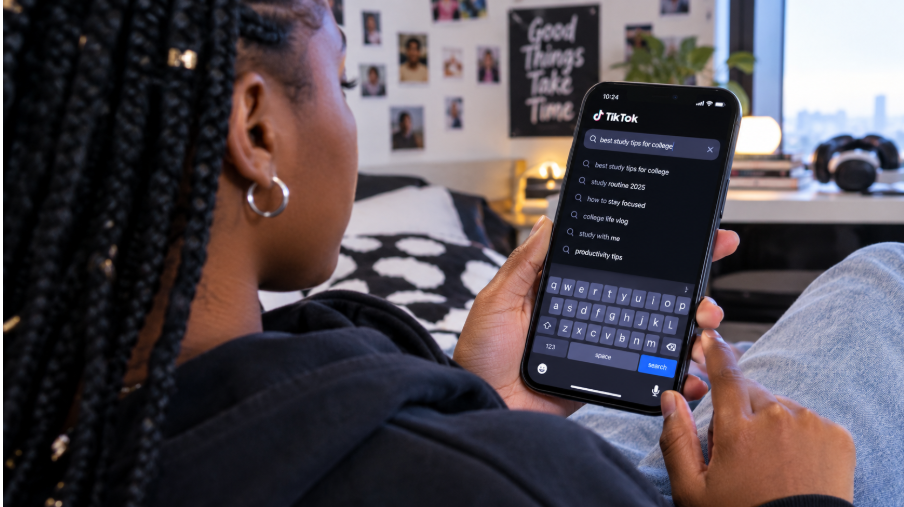
- Product search. You can visit the TikTok app and find the core keywords. You can filter your results by recent posts to see the shops and brands gaining the highest visibility.
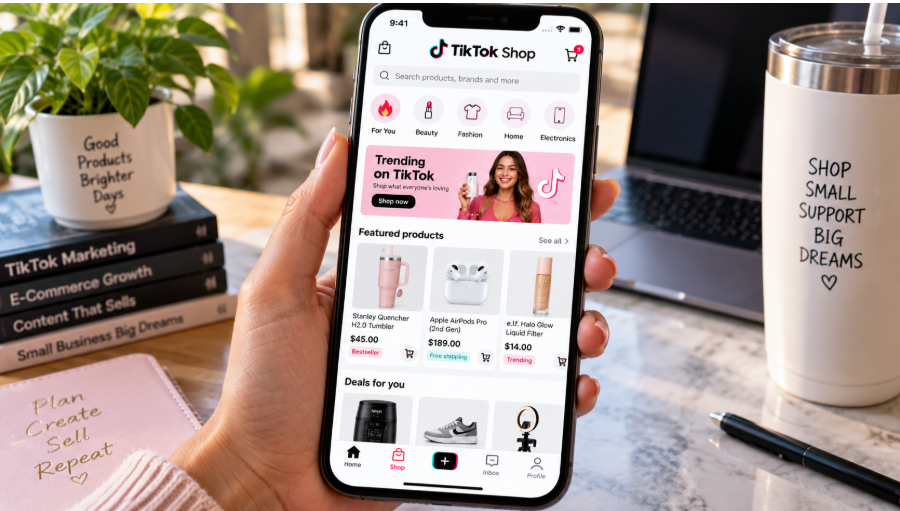
- Shop tab. This can provide insights into the top product for your TikTok Shop category rather than the top-selling brands.
- Check affiliate overlap. Find out the creators promoting the shop. When creators promote your direct product competitor, they are also your indirect competitors.
Make sure you add the sellers at your level as well as those above you for more helpful insights.
Create a Snapshot of Your Competitors
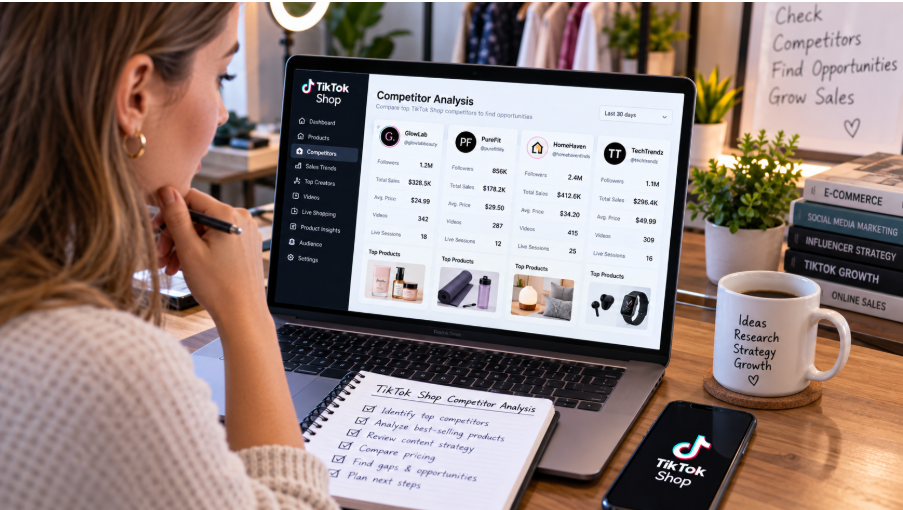
From the competitors you discovered in the previous steps, you can now focus on important metrics like:
- Top brand. Check their highest-grossing story in that exact product category.
- Product. How do the competitors structure their products to grow their impulse sales? Consider their best-selling product and the pricing strategy they use, and whether they focus on the base price or offer regular discounts.
- Content and video strategy. Check the resources they use to drive traffic and conversion to their store. Are they starting their video with a hook such as a shock factor, direct offer, or front-loading value? Are they using UGC, trending videos, and live shopping? Check their posting frequency. Connect this with their bundles, offers, and free delivery. While content helps with discovery, it also helps with conversion.
- Affiliate/creator network. Do they use influencer marketing to grow their sales? Which category of influencers are they using, and what rate of commission are they offering?
- Customer experience. How good are the competitors in order fulfillment and reputation, which can impact the TikTok algorithm? What shipping period have they stated? Track the volume and sentiment in the reviews. Is there a common pain point that the customers are showing that you can take advantage of?
Product Pricing & Promotions
From the competitors you identified earlier, you need to monitor their price movement. Do their products usually drop during a flash sale or livestream? By looking at this data, you can tell the true thresholds. Check if they are offering multi-buy discounts such as BOGO (Buy One Get One) deals or limited coupons.
You need to review whether they are incentivizing creators by adding higher tiers of commissions. You can analyze this by looking at the product showcase page as well as their affiliate programs. Use third-party TikTok analytics to estimate the sales and whether there is any historical price adjustment.
Benchmark with Your Category Standards
Check the Seller Center benchmark to compare with your own performance. Some of the key metrics you can track include:
- Shop Performance Score. The SP is a shop rating that ranges from 0 to 5, allowing sellers to benchmark against other shops in their category. To get the score, TikTok evaluates your product satisfaction, such as reviews and refunds, fulfillment, and logistics like shipping time and customer service.
- Fulfillment performance. This metric tracks the speed of order shipping and delivery. Under the fulfillment performance dashboard, you can compare your processing time with industry standards.
- Check performance. Check the distribution of your product reviews against those of your peers.
These metrics will show your standing in the market.
Turn Insights Into Tests
This is one of the areas where many sellers perform poorly. Instead of merely observing, you should take action. If you realize that competitors are pushing bundles, you can also test your own. If they are running a discount, you can experiment with one too, at the same time. If you find that certain video formats are helping you drive results, you can experiment with such videos. Make sure you implement a data-driven social media strategy.
How to Use the Analysis to Improve Your TikTok Shop Strategy
Instead of doing a competitor analysis and leaving it somewhere, you will need to complement the findings.
Here are a few ways of doing that:
- Product and pricing. When you discover that the competitors are relying on discounts, you will need to consider whether you will be competing on value or price. At times, providing better services, such as faster shipping, will perform better than reducing prices.
- Product category strategy. Check for market gaps. If you find that people are targeting the same audience and product in the market, it means there is a gap you can leverage.
- Creator/content strategy. Check who is selling what and when. If you find the same creator appearing at the top of the content, it shows they are doing well.
- Operational performance. The visibility of your TikTok Shop will be impacted by low cancellations, fast dispatch, and a great customer experience. If you have stronger operations than the competitor, this will be an advantage for your strategy.
In Conclusion
Gaining visibility for your TikTok Shop can prove challenging. This is why you need to be creative in how you easily get noticed. One of the ways in which you can do that is through a competitor analysis for TikTok Shop. By following the steps outlined above, you can grow your shop by learning from the competitors.