TikTok is one of the fastest-moving social media platforms. That means if you are not evolving in your content strategy, you risk falling behind. One way to stay abreast of trends and strategies on TikTok is through competitor analysis.
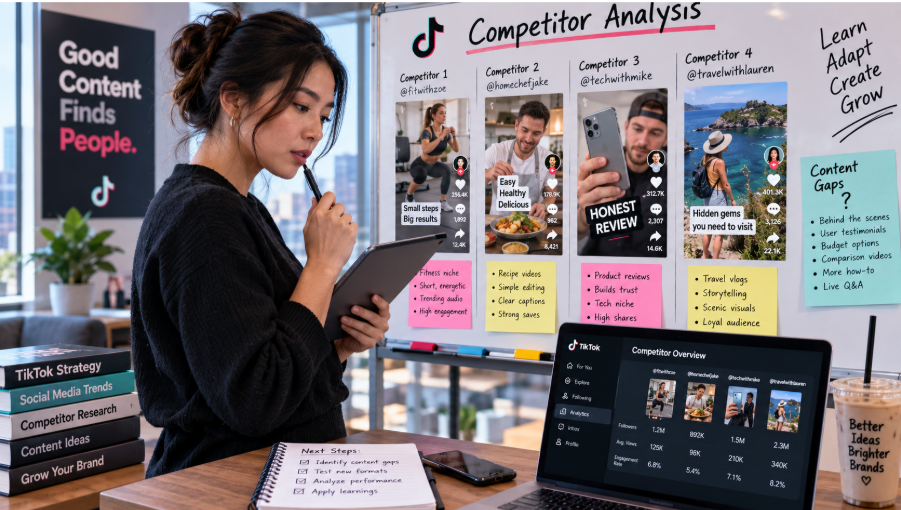
When performing a TikTok competitor analysis, you need to pay attention to the content gaps in your content and that of the competitor, too. This can provide insights into which competitor strategies are working, the missing elements, and the answers your audience is already seeking. In this article, we provide important insights into your competitor content gaps.

What is TikTok Content Gap Analysis?
TikTok content gap analysis involves finding the underserved, missing, or even overlooked topics that are in enough demand but there isn't enough content supply. This means it's a chance for creators to create videos that address a need and drive more engagement, views, and even followers.
These gaps offer great opportunities for content creators to find underserved areas with the audience on the platform. When they identify the gaps, they can attract viewers and increase the visibility of their content. On TikTok, the content gaps may be from a trending topic for which there are not enough videos or a niche that has not been fully explored. When you understand the content gaps, it becomes possible to create content that resonates with your target audience, thereby increasing your chance of driving engagement and making your content go viral.
How to Use Competitor Analysis to Uncover Content Gaps
TikTok competitor analysis can be a great way of uncovering the content gap. When you track the kind of content other channels are creating, you can discover the areas they may be overlooking and the topics where they are not performing well. You can then use this data to uncover any untapped opportunity that you can focus on, use a unique angle, or improve on.
Pay attention to the kind of TikTok topics your competitors are covering, target keywords, and engagement rates. Once you understand the content gap, you can focus on creating content that fills the gaps and captures your audience’s attention.
Areas of Content Gap to Track
A TikTok content gap occurs when people see your content without interacting with it. That means your posts are already driving comments, likes, saves, shares, and DMs. This shows there is a disconnect between the content you are creating and what your audience considers compelling enough to respond to.
Since engagement is an important social media algorithm signal, this is one of the areas you should not miss. Additionally, it is an important lens that focuses on your audience interaction instead of keyword targeting. When you close this gap, you can improve your content visibility in the algorithm, resulting in a higher level of community building.
When you discover there is an engagement gap, you can begin to experiment with different interactive formats like quizzes, polls, Stories, and Q&As to invite your audience’s direct participation. You can ask your audience some open-ended questions in the caption and ensure that you are responding to their questions.
TikTok Hashtag Gap Analysis
Hashtags play an important role in increasing the discoverability and visibility of content on TikTok. They play the same role as keywords in categorizing videos and enabling users to easily find videos related to their interests. By using relevant hashtags, you can increase your brand’s ranking potential.
When conducting a TikTok hashtag gap analysis, you need to identify hashtags that are in high demand, but there isn't enough content to cover. You can do that by studying your competitors' tags to find the keywords to target and avoid untapped niches and saturated tags.
Make sure you track both popular and niche hashtags. While the popular hashtags increase your content visibility to a larger audience, the niche tags can enable you to reach a targeted viewer group with an interest in the topic.
Stale Content Analysis
Social media trends are big in 2026, particularly on TikTok, and this is why you need to track whether your competitors are creating content that is relevant, timely, and current. If they have posts referencing outdated tactics, old trends, or previous-period campaigns, it can be an indicator that they are disconnected or irrelevant. Outdated content can also leave their audience confused, impact their trust, and make the algorithm deprioritize their post.
To conduct this content gap analysis:
- Check the competitor feed to see if there are posts referencing expired offers, past events, or outdated product features.
- When you spot a content gap, create high-quality posts with outdated visuals, up-to-date statistics, and a call to action.
- If there is content you consider timely, you can repurpose it to ensure maximum reach.

Uncovered Topics Analysis
When conducting a TikTok content gap analysis, you need to pay attention to various factors, such as:
- Unanswered questions. Is there a question that people regularly ask in the search bar and comment bar, but without enough videos covering it? Consider also if there is a topic that seems to be gaining visibility without many creators covering it deeply.
- Outdated information. Check if there are some old videos that viewers would be interested in, such as fresh or updated takes.
- Niche interest. Is there a certain niche that seems to have a large audience, but there aren't enough creators covering the topic?
- Unique format or angle. Perhaps the content angle looks repetitive, and followers would want to see an engaging format or a new perspective, such as storytime, how-tos, hacks, and transformations.
To find these content idea gaps, you can:
- Use the search bar on TikTok to check the suggested searches as well as the questions people are asking.
- Go through the comments on certain videos to check if there are any unanswered questions.
- Check hashtags to see if there are any underserved niches.
- Go through analytics to determine the trending topics.
Customer Pain Point Analysis
Pay attention to the competitor content to determine if it is tackling the customer’s pain points. If it is not, it means they are missing a big opportunity for building customer trust and loyalty. Remember that the majority of customers go to social media to vent their frustration and find solutions in real-time. When brands ignore customer pain points, they end up looking unresponsive and disconnected.
Once you notice a gap, you can use these tips to get ahead of the competition.
- Active listening. Make sure you are monitoring your DMs, comments, and mentions to pay attention to recurring requests, complaints, or questions.
- Check patterns. You can study the common pain points and categorize them as product confusion, service issues, or shipping delays to practically address them in the content.
- Create content that offers solutions. You can turn your customer frustration and FAQs into explainer carousels, how-to videos, or quick tips in your stories. This can show your audience that you are actively listening to them and ready to address their needs.
- Direct engagement. Respond to the customer's pain point publicly when it's appropriate to showcase transparency. Leverage features such as Q&A, polls, and stickers to get customer feedback and find out hidden issues.
- Close the loop. Share improvements or updates using the feedback you get from customers to make them understand that you value their voice.
TikTok Features a Content Gap
You need to study whether your competitors are using the latest TikTok features or are using the same old formats. Often, TikTok promotes new features, and therefore, content made using them is given prominence. Additionally, audiences may be moving to new features, which can be a good indicator of trends.
To track this effectively:
- Review your competitors' recent posts to see the features they are using and the ones they are ignoring.
- Start testing new formats.
- Track performance to determine which formats are driving the highest engagement.
In Conclusion
A TikTok content gap analysis can help you find topics that users are actively searching for content on, but there is a shortage of high-quality content. By following the steps outlined in our guide, you can easily conduct a TikTok content gap analysis. This is especially true when you combine it with curiosity gaps to drive clicks.