

Perhaps you have ever clicked on a headline, not because it promised value but because you were curious to find out more. You were pulled to the post not by logic, but by the gap between what you knew and what you didn't. That's how powerful the curiosity gap is.
It makes your audience lean forward, thereby increasing clicks by driving and holding attention. In this article, we guide you on using the curiosity gap to increase your click count and easily go viral on different social media platforms.
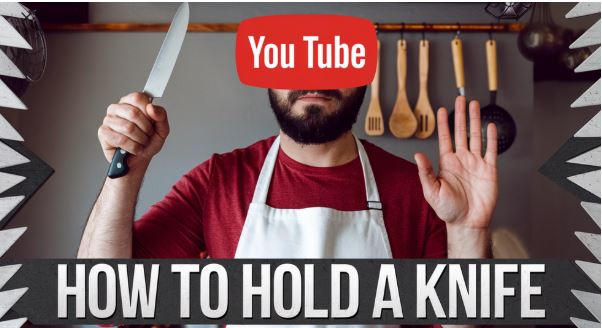
What is the Curiosity Gap?
The curiosity gap is a strategy that leverages readers' curiosity to entice them to click from an epic headline to the content. It uses a hint to tease the reader about what is coming without giving them all the answers they need. It is, therefore, a great strategy for compelling users to click on a video, blog post, or any other piece of content on social media or even in email marketing. It can be a good strategy for increasing views and engagement on Facebook.
Why Consider Using the Curiosity Gap?
The human mind is hardwired to resolve any uncertainty. When we sense that something is missing, we want to have closure. That means the curiosity gap can help you to:
- Instantly grab attention. While scrolling through social media, the curiosity gap can be a scroll-stopping element.
- Emotionally invest in content. When people seek answers, they get invested in the content.
- Drive Micro-action. A curiosity gap can make people click, comment, and explore content. It can be a good strategy for increasing views on Facebook Reels.
- Increase the dwell time. When there are gaps in your content, they can encourage people to keep watching, reading, or even listening.
Therefore, when leveraging the curiosity gap, the goal isn't to be loud but to open the loop.
The Psychology Behind the Curiosity Gap
According to research by Harvard Business Review, curiosity usually triggers the brain's reward system in the same way food does. When people perceive a gap between what they know and what they don't, it leads to psychological discomfort that requires resolution. The only way to end the itch is to keep watching or reading. This discomfort often results in a more powerful engagement than a benefits statement and logic alone. However, the curiosity gap isn't about manipulation but building momentum.
If you don't use the curiosity gap, you might have the right offer, even when targeting the right audience, but people scroll past if they don't see anything to make them linger.
Key Elements of the Curiosity Gap
The curiosity gap aims to fill three key elements. These are:
Headlines
The headline is arguably the most important part of filling the curiosity gap. You need to add a headline that entices users in a few seconds and makes it irresistible. You only have a few seconds to entice your audience, so you need to balance providing information with intrigue. You must provide your users with just enough of an article teaser without revealing the information.
One brand that effectively uses this approach is Upworthy, which requires all writers to create at least 25 headlines for each article, regardless of angle, topic, or length. However, when using the curiosity gap in the headline, you also need to ensure that your article delivers on the promise of the headline.
Publishing Frequency
Frequency is another important element that helps fill the curiosity gap. With sites like Upworthy and BuzzFeed publishing a lot of content, you need to ensure your posts reach a large audience. These are examples of brands with posting schedules that leverage curiosity.
They do that by providing only a selection of the story, while withholding others. By posting frequently, they can keep their audience curious, engaged, and checking in, not for resolution.
Top Curiosity Formulas to Use
There are different curiosity formulas you can consider using. These are:
The Withholding Formula
In this formula, you focus on providing a hint of valuable information without revealing the details. It involves revealing the results while withholding the methods used to obtain them until the end. Examples of such include:
- The one saving tip that most savers ignore that makes them fail.
- What we found common in all accounts with over 100K followers.
- The top posting schedule that outperforms others.
This can be an important formula for increasing Facebook engagement.
The Contrast Formula
This involves showing unexpected contrast. Examples of such include:
- Why do the worst-designed ads perform better than the best ones?
- Every email that used these words had an open rate of over 70%.
- This is the only social media strategy that will deliver results when you post less.
The Specificity
Specificity drives more curiosity than value. Examples of this curiosity gap are:
- How our video reached 100k views in three days without ads.
- This 3:1 ratio helped us rank first on Google in one month.
- Why does posting on Friday outperform posting on Saturday?
The Challenges
This formula involves challenging something the reader believes. For instance:
- You have been using hashtags wrongly, and here is the proof.
- Instead of creating the content calendars (you can do this).
How to Use Curiosity Gap on Social Media
According to Loewenstein's information-gap theory, there are four triggers of curiosity.
- A posed question that isn't answered.
- A started sequence that isn't completed
- A hint of something surprising that violates expectations.
- Other people understand something you don't (the social knowledge gap).
The human brain treats the curiosity gap like an open tab of a browser that runs in the background until it gets resolved. Based on these formulas, here are some great ideas on using the curiosity gap on social media platforms:
Hooks on Instagram and TikTok
You need to ensure that the first line in the caption or the first 2 seconds serve the purpose of opening the gap.
- First line. How I stopped posting daily, leading to the tripping of my engagement.
- Carousel cover. The top 5 things I would do differently if I started a brand today.
LinkedIn Posts
This is a great platform for starting with a bold statement that adds context.
- How turning down a 100K client turned out to be the best decision ever.
- How this worst copy gave us the best results.
Email Subject Lines
- After analyzing over 500 email subject lines, this is the one pattern I noticed.
- This is the mistake you made in the last campaign.
- Avoid opening this email (or else you will get 500% more leads).
Big Headlines
You want to ensure that you are not only using curiosity, but that the readers and viewers see the value. Examples of such include:
- This content strategy grew our traffic by 3x (and this is why many guides miss it).
- After A/B testing over 200 viral Instagram posts, here is the one thing we found in common in them.

Common Mistakes to Avoid When Opening the Curiosity Gap
When using the curiosity gap, several mistakes should be avoided. These include:
- Opening several gaps at once. A good idea would be to open a gap at once. If you have several unresolved issues, this may feel chaotic instead of interesting.
- Not closing the gap. If you offer a hook insight, make sure you deliver it clearly in the content. When open gaps don't close, they erode trust.
- Confusing vagueness for curiosity. If you say “great tips inside,” this isn't a curiosity gap but confusing. Instead, you can use something like “This is the one tip that doubled our reply rate” to trigger the reader’s curiosity.
- Overusing curiosity. Use a different pattern in each post, or the audience can become immune. Make sure you are not only using curiosity, but also hooks that add value.
- Using clickbait. A common mistake creators make is confusing clickbait with the curiosity gap. While the curiosity gap delivers on its promise, the clickbait doesn't.
Tracking the Effectiveness of the Curiosity Gap
To determine if your curiosity gap is working, there are several metrics you need to track, such as:
- Click-through rate. A metric that tracks how many people are clicking through.
- Watch time/time on page. Are people staying on the page to get answers?
- Bounce rate. Do they leave instantly? If they do, it shows they are not getting satisfied.
- Bookmark/save rate. If you use the curiosity gap, and it results in a high save rate, the content is delivering on what it promises.
In Conclusion
Perhaps you have ever felt that itch to click on something you didn't know, since you wanted to find out more. The feeling isn't accidental; adding a sense of curiosity and that burning desire to get answers increases the click-through rate. The curiosity gap is, therefore, a powerful tool for content creation, whether it's for creating the body caption or the social captions.
Remember that the goal isn't to trick people but to provide them with a good reason to notice. Use a surprising, specific, or challenging hook, then use content to close it. By following the steps outlined in our guide, you can understand the psychology that drives curiosity, how to fill the curiosity gap, and how to use the strategies in your different marketing methods.


