

Social media competitive analysis can help you better understand market trends, industry gaps, and the competition. However, if you want your efforts to bear fruit, you must create a report of your findings. This report will outline your brand's current market position and identify areas for improvement.
A competitor analysis report combines your benchmarking and insight metrics into a comprehensive competitive report that guides your team and helps them utilize the data to support your strategy. This article will guide you on creating the report.
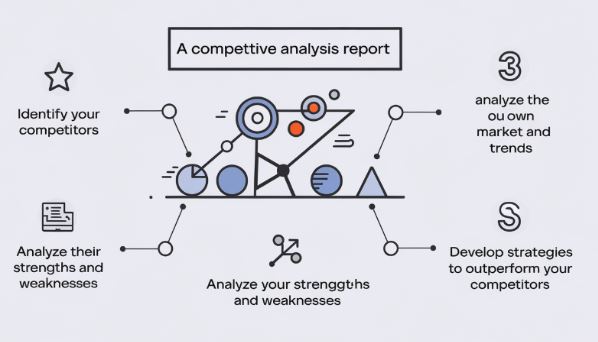
What is a Competitive Analysis Report?
A competitive analysis report evaluates competitors to understand their brand positioning, strengths, weaknesses, and strategies. It indicates your brand's performance compared to other industry players. The document consists of information about your competitors, such as:
- Marketing positioning.
- Product or service analysis.
- Sales strategies.
- Marketing/advertising strategies.
- Customer reviews and experiences.
- Pricing strategies.
- Competitor SWOT analysis.
By conducting this competitive activity audit, you can gain insights to improve your marketing strategies.
Importance of Having a Competitive Analysis Report
A competitive analysis report will serve different purposes, such as:
- Understand your market positioning. Through competitor research, you can understand where your brand stands, identify the market leaders, recognize the brands you outperform, and pinpoint the elements that differentiate players.
- Understand your competitors' strengths and weaknesses. Understanding your competitors' strengths and weaknesses can help your brand refine its strategies by addressing weaknesses and capitalizing on gaps in the market.
- Discover opportunities and trends. By closely monitoring your competition, your brand can identify industry trends as it observes how other brands innovate or evolve, helping you stay proactive and relevant.
- Determine your content and marketing strategy. When you discover the campaigns, channels, and content that are working for your competitor, you can easily adapt your approach.
- Risk mitigation. Through competitive analysis, you can identify potential threats, changing consumer preferences, and new entrants, enabling your brand to react quickly.
- Better product development. Understanding what your competitors offer helps you improve your product offering and avoid costly mistakes.
Steps in Creating a Competitive Analysis Report
Here are the steps to follow when creating a competitive analysis report:
Determine Your Goals
You need to be sure of what you want to achieve with your business goal. Is it to increase your visibility, generate quick revenue, or rank higher on Google? Your business goal will determine the steps you take and the type of research you conduct.
For instance, if your goal is to increase brand awareness, there are several things you can focus on in a competitive analysis, such as:
- Identifying the platforms where your competitors are mostly active, such as TikTok, Instagram, or LinkedIn.
- Studying the content formats that competitors are using (stories, carousels, reels) and their posting frequencies.
- Identifying the competitor's voice, visual brand, and tone to understand why they connect well with their target audiences.
- Comparing organic and paid activity. You can track their organic vs. paid efforts to determine whether they are running full ad campaigns or boosting posts.
- Performing a brand voice audit. This will help you understand if their posts resonate with their audience.
For a more targeted competitor analysis, ensure your business goal is specific.
Identify the Competitor You Will Be Analyzing
You also need to understand who your competitors are for a more effective competitive analysis. Your competitors can be categorized into three distinct groups. These are:
- Direct competitors. These are the brands or businesses offering products similar to yours.
- Indirect competitors. Brands catering to a similar audience but with a product different from yours.
- Potential competition. These businesses are emerging and may not be your competitors now, but their rapid growth suggests they will be in the future.
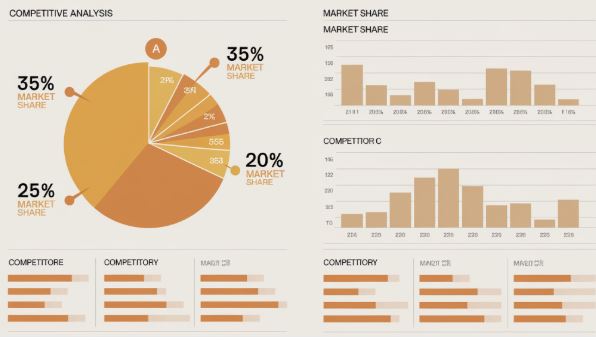
There are several strategies you can use to find your competitors, such as:
- Conducting a Google search for your product and identifying the top competitors.
- Determining the competitors your target audience is speaking to using social listening tools.
- Checking Reddit, niche communities, and forums to see mentions of your competitors and how they compare with yours.
- Utilizing tools like Semrush and Ahrefs to determine the website's ranking for relevant industry keywords.
Create a list of three to four competitors you will analyze more thoroughly, without feeling overwhelmed.
Understand Your KPI Benchmarks
You need to decide if you will be analyzing one metric or different ones, such as:
- Business model and market position. How do your competitors make money, and why does your shared audience see them differently?
- Product or service offering. This will break down what your competitor is selling, the included features, and their value proposition.
- Digital presence analysis. Consider your competitors' online strategies. Are they sticking to blogs or mixing them up with webinars, events, influencer marketing, and referral marketing? Do they have a plan that works for both organic and paid ads?
- Performance data and benchmarking. You can employ various strategies, such as audience analysis, to identify your competitors. You should also research the platforms where your competitors are most active and where their presence is growing.
- Customer satisfaction and experience. By analyzing your competitors' reviews and customer feedback, you can see where your competitors are meeting users' expectations and where they are falling short.
Conduct a SWOT Analysis
A SWOT analysis aims to assess your strengths relative to your competitors'. For instance, is your social media customer service more responsive? Do the competitors have a bigger online presence? Consider the market opportunities, such as whether there is a particular customer segment the competitors are ignoring. Are you adopting new channels, such as AI chat or Threads, quickly or slowly?
Compile the insights
After researching and analyzing your competitors, you need to do more than put the data in a spreadsheet. Instead, summarize the key takeaway for each core area —sales, marketing, product, pricing, customer experience, and social media strategy. You can even have more actionable insights and put the insight notes into questionnaire formats, such as:
- Why is it that your competitors are performing better?
- What gaps are they not utilizing?
- What gaps can we fill better?
- How do we plan to fill the gaps?
Ensure the action plan is simple, including short summaries, bullet points, and clear steps, and that all team members are correctly aligned.
Final Thoughts
Competitor analysis reports will show how you compare to competitors in various business areas. They can, therefore, be a significant part of any social media strategy.


