

You have probably encountered brands on social media that hack it while others struggle. The difference is in how they understand their competition as part of their long-term social media growth strategy. To enhance your digital presence, it is essential to analyze your social media competitors.
You can identify successful marketing tactics through social media competitor analysis, discovering content ideas, and gaining insight into industry trends. It can also help your business performance and identify gaps you can fill. This guide will take you through the steps of executing a social media competitor analysis. You will learn how to identify your competition, their tactics, and refine your strategy to become the market leader.

What is Social Media Competitor Analysis?
Social media competitor analysis evaluates your competitors' presence and performance across various social media platforms to understand their strengths and weaknesses in comparison to your own. It involves studying their social media strategy, content strategy, audience engagement, and overall performance to identify opportunities, insights, and trends to guide your social media strategy.
With 91% of companies in the United States with over 100 employees using social media for marketing, your competitors are likely using social media to create brand awareness, network, and provide thought leadership. When you understand the key elements of your competition on social media, you can get insights into their strategy for your industry and audience. Some of the aspects of competitor analysis you should track include:
- Trends in follower growth.
- Engagement metrics such as likes, comments, and shares.
- Posting time and frequency.
- Content formats such as stories, images, and videos.
- Use of hashtags.
- Tone of the message.
- Audience sentiments.
According to one study, 53% of customers report that they follow brands due to brand loyalty. You can discover what brands are doing to attract loyal customers through social media competitor analysis. By analyzing your competitors on social media, you can answer different questions, such as:
- The type of content that is resonating with your target audience.
- The way in which your competitors are engaging with your followers.
- The social media platform where your competitors are more active.
- The strengths and weaknesses of your competitor's strategies.
- Hashtags and keywords your competitors are using.
- Gaps in your social media strategy.
Benefits of Social Media Competitor Analysis
A comprehensive analysis of your competitors' social media activity can provide insights into their performance, content trends, audience inference, and brand positioning.
Here are some top reasons why competitive analysis is a great way to improve your content strategy:
Understand Your Competitors' Strengths and Weaknesses
To effectively compete, you must understand your competitors' social media marketing strategies, identifying their strengths and weaknesses. Pay attention to the content type and its audience engagement metrics. Observe their interaction levels with their audiences and take notes from their tactics.
You can then use the insights to develop a better content strategy than your competitor, one that attracts leads and increases brand awareness. Study how they interact with followers and adapt the tactics that fit your brand, without copying their content. Utilize the information to gain a competitive advantage and differentiate yourself in your niche. For instance, you can learn from their social media style guide to ensure consistency.
Get Important Benchmarks
When you track your competitor’s KPIs, you gain a better understanding of your market and gather valuable insights. You can then use the information to set more accurate goals. By tracking key metrics, such as the growth rate of followers and engagement rate, you can gain valuable insights into the performance of your content and evaluate your current social media strategy.
Provides a Good Performance Overview
A social media competitor analysis can be a valuable way to gain insights into your market. To achieve this, ensure you have a strategy that focuses on both direct and indirect competition. Consider the hashtags they are using in relevant content and discussions within your niche, so you remain updated on key developments.
Ensure you understand how your competitors introduce new trends and their campaign strategy. Once you know what is working and what isn't, you can change your plan and increase your social media engagement.
Better Trend Alignment
A social media competitor analysis aims to understand your competitors' strengths and weaknesses, helping you discover new social media trends. There are several ways to collect your competitor’s data to uncover social media trends.
- Monitor mentions and hashtags.
- Track your competitor's content strategy.
- Analyze competitor visuals to gain a deeper understanding of how your competitors respond to specific messages.
- Track how your competitors are responding to specific campaigns or trends.
- Spot industry trends by analyzing social media group content and tags.
- Track what social media content creators are tracking.
Therefore, observing competitors can provide valuable insights into emerging topics, patterns, and engagement metrics, helping you understand the content that resonates with your target audience. This knowledge can help you remain relevant, adapt to changes, and stay ahead of the curve.

Better Customer Service
By observing how your competitors manage interactions with their customers, you can assess whether they effectively handle customer interactions. You can see how fast they respond to customers' interactions and how they solve customers’ problems. You can then use the information to enhance your customer service strategy.
For instance, if you realize that your competitors are publicly resolving customer complaints and turning those negative situations into positive experiences, you can use a similar strategy to enhance customer satisfaction. Additionally, it can provide insights into everyday issues that customers often raise, allowing you to prepare resources and responses to address them effectively.
If you realize that your competitors are struggling to respond to audiences, ignoring some platforms, or not providing helpful support, you can use that to put your brand ahead of the competition. When you resolve customer service issues promptly, you demonstrate to your customers that you value their feedback, thereby enhancing your brand reputation.
Better Audience Targeting
When you track how your competitors engage with their audience, you can gain valuable insights into who their followers are, the types of content they prefer, and how they interact with it. This involves focusing on the posts that receive the highest engagement and analyzing their communication styles and tones on the platform where your audience is most active.
For example, if you notice that your competitor is posting more behind-the-scenes content and receiving numerous likes and comments, this can indicate that your audience is seeking transparency and authenticity. Then, you can use the information to add similar content strategies, such as behind-the-scenes posts, to better align with your audience's content preferences. When you understand the messaging that resonates with your competitor’s audience, you can adjust your social media strategy to increase engagement and conversion rates.
Key Metrics to Track on Social Media
You should track these key performance indicators when conducting a social media competitor analysis.
Engagement Metrics
The engagement rate is a social media metric that measures the frequency of a user’s interactions with content, including comments, shares, and likes. Engagement metrics can be categorized into different categories, such as:
- Engagement rate is a ratio of social media interactions to the total number of views or followers. It is usually measured using shares, comments, and likes.
- Amplification/share rate. You also need to track the frequency at which the content is shared by viewers or followers compared to your total social media audience size.
- Click-through rate (CTR). It measures the number of social media users clicking on a call-to-action or link against the number of people who saw the post.
Content Metrics
This metric will provide insights into your competitors' content strategies, including post length, content mix, timing, frequency, number of views, content scheduling, and other key factors.
Here are some key elements to track under content metrics:
Posting Timing and Frequency
This metric will help you understand when your target audience is primarily active on social media platforms, increase your brand reach, and maximize engagement. While there are no golden rules and everything will depend on your goal, here are some general rules on the number of times to post:
- Facebook. Once a day.
- Instagram: One to two times a day.
- TikTok: One to four times a day.
- X (Twitter). Two to five times a week.
- LinkedIn. Around three to five times a week.
Hashtag Analysis
When performing your competitor’s hashtag analysis, you will study how they use different hashtags, such as the type, volume, and most popular hashtags. This helps you improve your discoverability and better connect with your audience.
Post Length Analysis
This aims to determine the optimal media duration and word counts that your competitors use to achieve maximum visibility and impact on various social media platforms.
Audience Metrics
Audience metrics aim to provide insights into the behaviors and characteristics of your audience’s followers, helping you understand your target audience and how they interact with your content. Some of the elements to track are:
- Follower growth rate. This is how your brand gains new subscribers or followers on social media. The metric can indicate your brand’s success in attracting new audiences or expanding its presence on social media.
- Social media demographics reveal the distinctive characteristics of your user base on social media, including their age, location, gender, education, interests, and income level.
Visibility and Reach Metrics
This metric usually tracks the unique users who view your competitor’s content and the rate at which the content spreads across different platforms. You will need to consider:
- Impressions. This refers to the number of times a piece of content, story, ad, or post is displayed on someone's screen, whether or not they click it. If the same person sees it twice, that counts as two impressions.
- Share of voice. This compares your competitor’s total brand mentions, impressions, and engagement to those of your brand. Its visibility is a good indicator of the brand's social media presence, indicating how noticeable or dormant a brand is. A good strategy for tracing SOV is through social listening that tracks mentions, ratings, and reviews. It will show you popular themes, emerging trends, and customer sentiments to help you develop a better social media strategy.
Steps in Social Media Audience Analysis
For the best results in social media audience analysis, follow these steps:
Identify Your Competitors
Begin by creating a list of your competitors, including both direct and indirect ones. Direct competitors refer to those who offer products or services that are similar to yours. While indirect competitors offer products different from yours, they also target the same audience. Ensure you also understand the parameters you would like to compete.
There are several tips you can use to identify your competitor, such as:
- Use keyword research tools. Tools such as Ahrefs and Semrush can show competitors' rankings for keywords similar to your business.
- Go through social media platforms. Search for your main keywords on platforms like TikTok and Instagram to identify the brands that appear in the results. These are your competitors on social media.
- Confirm your audience’s preferences. Use the audience insights in Meta Business Suite and similar tools to learn what your audience is interested in. If their customer profile is similar to yours, they will also likely be your competitors.
- Social media listening tools. Tools like Brandwatch, Sprout Social or Talkwalker show which brands your audience talks about and follows.
- Check similar brands. Brands your audience likes that sell something different but compete for the same budget or attention are your indirect competitors. By adding them to your analysis, you will gain deeper insights into your audience's preferences.
- Use SERPs. Visit Google or other search engines and enter the keywords consumers will likely enter when searching for your brand.
When you identify the brands targeting your audience's attention, you can analyze the strategy working for them and identify gaps and areas for improvement. You can also monitor how competitors position themselves and the areas of success. Then, you can use this information to create a more effective social media strategy.
Analyze Their Social Media Strategy
After identifying the competitors, you must dig deeper into their social media strategy. Take time to understand the platforms where your competitors are mostly active. This will provide you with insights into which platforms to focus more on.
Analyze their social media platform, content distribution, content mix, posting frequency, themes, hashtags, and successful partnerships. In addition, ensure you analyze the competitors' paid social media strategies, as these can serve as important data points for refining your approach.
Benchmark Your Performance
Ensure that you compare your social media performance with that of your competitors. Working with the KPIs you identified earlier, benchmark those metrics against the competition and industry standards to understand your position.
When you conduct a side-by-side competitor analysis and examine the broader industry, it becomes easier to understand your strengths and weaknesses. This will help you identify the opportunities you want to improve, develop a more refined content approach, and ultimately stand out in the rapidly changing digital landscape.
This will help you identify opportunities to enhance your strategy, refine your content approach, and ultimately differentiate yourself in a crowded digital landscape. Using competitor analysis tools, such as Sprinklr, you can get the necessary data into:
- Competitor average. Review your competitors' average metrics, including audience growth and engagement.
- Industry average. It will show you your brand's performance against that of the competition.
Leverage SWOT Analysis
Once you have collected and organized data, use data analysis to put it into perspective. The data will help you understand your competitor's position and develop a strategy.
Here are the things to identify in a social media SWOT analysis:
Strengths
You need to consider where you are performing better than your competitor. Do you have a high video engagement rate, use your video content more effectively, or have a greater influencer network? Once you understand your strength, you will know what you need to continue and most likely amplify.
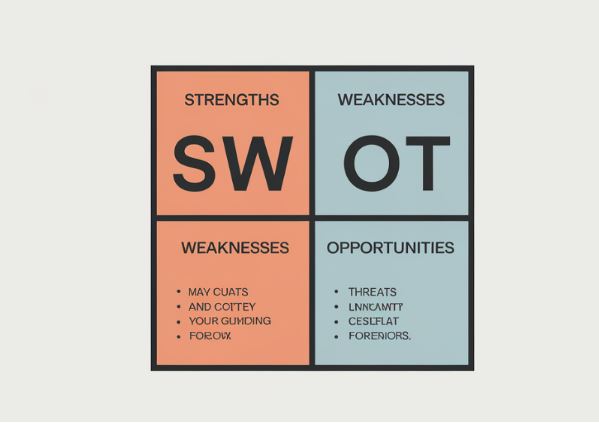
Weaknesses
You need to ensure that you understand where your content is failing. Your competitors may be creating posts that drive higher engagement than you, or they may have a strong social media presence on TikTok that you've overlooked. When you understand your weaknesses, you will better understand the areas for improvement.
Opportunities
Check if your competitor's strategy has gaps, such as a specific social media platform they are not utilizing. Make sure you increase your presence on that platform. If there are some new social media trends, these may also come with opportunities.
Threats
Ensure that you also understand any potential threats to your brand, such as the aggressive growth of the competitor on a platform or the competitor's use of cutting-edge technologies. Understanding these threats will help you maintain your competitive edge.
Through SWOT analysis, you can better understand your standing and make an informed decision to better strategize in the future. When you systematically analyze your competitors, you can gain essential insights for a more refined social media strategy. You can then use this information to ensure that your brand resonates more effectively with your target audience.
Strategy Comparison
After analyzing your competitor's social media activities, you need to compare their strategy with yours. This will help you identify areas where you can enhance your strategy, ensure brand differentiation, and avoid common pitfalls.
Here are tips on doing that:
- Identify improvement areas. Review your content, promotional, and engagement strategies to determine if your competitors are outperforming you in certain areas. Use this information to ensure a more refined approach.
- Check the differentiation opportunities. Is there something that the competitor is missing in their strategy? For instance, is there a specific type of content they aren't using? Identifying the gaps will provide you with opportunities for differentiation.
- Mitigate threats. If you find that the competitor is using a specific tactic to gain inroads into your market share, consider ways to counteract it. For instance, if you realize they have a successful hashtag campaign, look for ways to create campaigns that resonate better with your audience.
- Create actionable insights. You need to translate the observations from market research into specific actions. For instance, when you notice your competitor’s videos getting higher engagement rates, research the reason. Is it that they are creating more engaging videos? Do you need to improve your video production? Are they aggressively promoting the video? These answers will enable you to get more from the video content.
Best Social Media Analysis Tools
If you are trying to track your social media competitors manually, not only is the process inefficient, but it can also be quite unreliable. To make your competitor analysis more impactful, ensure that you leverage the following tools:
- Social media native tools. Most social media platforms offer analytics features that provide valuable insights into your performance. While most will not show your competitors' performance, the data will show you the performance of your campaign.
- BuzzSumo. This tool will provide insights into your social media content, using highly shared content to identify the influencers promoting your competitors' content. It will also show you the top-performing content for a specific topic among your brand and competitors. It will track the engagement level of a social media post and the total number of shares on the web.
- SEMrush Social Media Tracker offers insights into your competitors' activity, engagement, and growth rates across various platforms, enabling you to benchmark against them.
- Sprout Social can provide detailed insights into your competitor's stories, including the topics they are creating more of, their audience’s response, and the performance of the content.
- Ahrefs. Just like Semrush, Ahrefs can provide insights into top organic keywords. This can provide insights into the traffic the competitor is not getting on the keywords. Ahrefs will also show you content receiving the highest amount of backlinks, proving that the content is performing well.
In Conclusion
A social media competitor analysis can provide essential insights into your competitors' strategies, including what works and doesn't. That means you don't have to keep guessing about the content, keywords, or campaigns that will enhance your strategy. By following the methods outlined in this guide, you can obtain in-depth performance metrics of your competitors, including the traffic they receive, the keywords they target, and their audience engagement rate.


