

No matter what your Facebook advertising budget is, you want to get as much as possible out of every dollar. One of the ways of doing that is by ensuring that you are reaching the right audience with the right ad. Fortunately, the advanced Facebook targeting tool will enable you to reach the right audience.
No matter how effective you think your ads are, you may realize that they don't bring you the results you expected. The good news is that through Facebook A/B testing, you can determine the kinds of ads that are effective and will result in a higher conversion. This article looks at how to A/B test to increase your Facebook conversion.
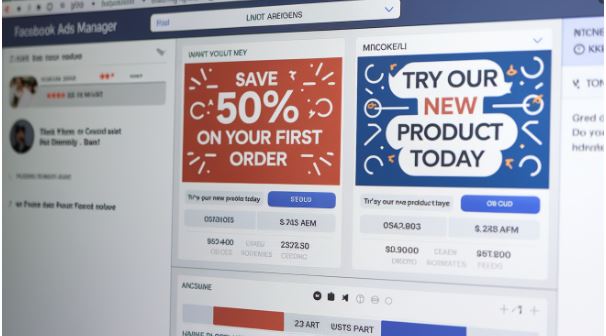
Importance of Facebook A/B Testing
If you want to create Facebook ads that convert, you will need to do more than set your ads and forget. You will need to consistently pay attention to your ads to see how they perform, test continuously, and optimize to see success. Here are some great reasons to A/B test Facebook ads:
- Facebook can be tricky. You might have your ad performing well today, but a sudden change in the algorithm or other unknown reasons may make the performance of your ad drop.
- More cost-effective. A/B testing can provide important insights into your audience, helping you figure out what is working and what isn’t. By targeting what your target audience identifies with, you can enhance your targeting and save costs.
- Reach whole audiences. One user in your target audience may be captivated by one thing, while another user may be fascinated by something different. This is why A/B testing can provide effective results, especially when you understand how to interpret and analyze A/B testing data.
How to Do Facebook A/B Testing
An AdEspresso study shows that when done right, A/B testing can noticeably improve your return on ad spend. Here are the steps to follow when A/B testing Facebook ads:
Determine Your Goal
Before you set up your Facebook A/B testing, you need to begin by setting up a goal to see which variation of the ad will help you reach the desired goals. Your A/B testing can have different goals, such as:
- Increase the traffic to your site consistently and effectively. You can then test and optimize for the link clicks in an ad, as well as the landing page views in a different ad set, to determine what brings you a lower CPC.
- Lower the cost of generating more leads. You can also have the goal of generating more leads at a lower price, especially if you want to guide people to a landing page or a website.
- Increase video views. You can test different variations of videos. For instance, you can have one video with other copies to determine which audience watches longer.
- Improving your CTR. You can test two or three variations of the exact copy using one creative in the first testing round. If you find the CTR to be lower than 1%, this is an indication that your ad doesn’t resonate with your target audience. You can, therefore, test the advertisement with a new audience. If you find the CTR to be over 1%, you can test new creatives to determine if you can raise it to more than 2%.
Determine the Variable
Facebook ads allow you to test many variables, such as:
- Objective of the campaign.
- Audience.
- Optimization.
- Elements of the ad, such as the headline, copy, CTA, creative, etc. You can learn how to A/B test CTAs.
We will look at these variables later on.
First Testing Round
To determine the best-performing ads, you will need to create two to three identical ads but with different copies. Avoid testing more than one variable, as this might leave you confused about which element caused the difference.

Leverage Your Data Plus Facebook Data
As you continue to test ads, check to see how the ad is performing during the first few days. Before you start optimizing the ad, make sure you have passed the learning period. The learning period of your A/B test should be around 2 weeks to capture the user behavior well.
Let the test run for 2 to 5 weeks to make your sample size statistically significant and validate any trends you may observe. The duration will depend on different factors such as the desired effect size and website traffic. However, it's not recommended to run for less than a week.
As you continue to run tests, you will realize that you will select one or two of your ads as favorites based on their performance. You can combine this with your own data to determine which ad will be the actual winner. For instance, if Facebook discovers that an ad has fewer impressions, while your data reveals it's driving conversion cost-effectively or has a higher CTR, you can keep running the ad.
Disable Underperforming Ads
After running the ads for at least two to three weeks, you will have enough data on what is performing or underperforming. You can now go ahead and disable the underperforming ads to focus on the next variable. Ideally, when you have discovered the best-performing ad, you can focus on testing the copy. You can then use the winning copy on each ad while changing the creative. This will provide insights into which combination of creatives and copy brings the highest conversion.
Rinse and Repeat
Keep changing one variable at a time. Remember that when you keep testing, determining the winner, and improving the performance, you usually end up paying less for each result.
Factors to A/B Test in Your Facebook Ads
As we noted earlier, there are different elements of a Facebook ad that you can A/B test. When deciding on the right factor, make sure you select one that will improve the metric you want to improve. Let us look at the key variables you can A/B test:
Campaign Goals
Meta groups campaigns into six objectives: Awareness, Traffic, Engagement, Leads, App promotion and Sales. Here are some useful comparisons to test:
Driving Traffic vs. Lead Generation
You can compare whether it's more effective to increase sales or conversion by using a lead generation campaign or a traffic-driving tool. A lead generation campaign results in higher volumes of leads at a lower cost, but may result in low-quality leads. But if you run a traffic campaign that takes users to a lead generation landing page, this may result in lower but higher-quality leads because if people are leaving their Facebook accounts to go to your landing page, this shows they are genuinely interested in your product.
Conversion Campaigns vs. Website Traffic
You can also A/B test your campaign goal of whether to increase conversion using website traffic versus a conversion campaign. Both options are good for reaching your conversion goals at a cheaper price. On the other hand, you might spend less on the upper funnel campaigns. This can be a good A/B testing element for a more cost-effective solution.
Audiences
Another option to test in an ad set is the custom vs. native audiences. For instance, your goal might be to drive users to buy dog food; one ad can focus on people interested in dog food, while another can concentrate on the people interested in your competitor’s dog food company. The third can consist of your look-alike customers.
Optimization
Every type of campaign will allow you to set an optimization goal for the ad sets. If you are running a website traffic campaign, the optimization options can be for landing page views or link clicks. You can test your ad set using these to determine the better-performing ad.
Different Elements of the Ad
When it comes to a Facebook ad, there are different elements of the ad you can test. These elements are also important as they determine the performance of your campaign. They include:
- Length of the ad copy (long or short).
- Creative (video, single image, or carousel).
- Headline.
- Call to action.
- Landing page.
Determine which of these elements you want to test and test each of them once for different campaigns and audiences. Unless you are running dynamic ads, avoid testing more than one element at a time.
How Much Should You Set on an A/B Testing Budget?
You don’t have to overspend on your A/B testing. In fact, it would be enough to test with a budget of $1, even though this will also depend on different factors, such as the campaign type. If you are focusing on the top-of-the-funnel campaigns like awareness, search, and engagement, you can even get results with ads and boosted posts. However, if you are testing the lower funnel, such as conversions, a small budget will be ineffective.
Remember that a smaller budget will often result in slower testing, learning, and optimizing. Therefore, the higher your allocated budget, the faster you will be out of the learning period. You will get more impression data and improve your performance data.
For the best results, especially in the lower funnel stage, you can begin with at least $10 per day. You can then increase your budget by 10% as you get more optimization data. But remember that scaling too quickly can also backfire if Facebook is unable to spend your budget, resulting in a lower quality campaign.
Affordable Facebook A/B Testing Methods
While the goal of A/B testing ads leads to more cost-effective ads, the process can be expensive. If you are looking for a cost-effective way of A/B testing your ad, consider one of these options:
Dynamic Ad Campaigns
While manual ad testing will also work, it can slow you down. If you want the process to move faster when serving, testing, and optimizing ad cost effectiveness, use dynamic ads. This is because you let Facebook combine different ad copy and their creatives, particularly for prospecting campaigns, which provides quick insights from the testing.
Testing Upper Funnel Campaign Goals
If you are running ads on a smaller budget, such as $10 per day, and with products or services that cost more, a good idea would be to test run the upper-funnel goal of the campaign. This is important as this can be less expensive. Take note that maintaining high conversions, especially for highly priced items, can be a challenge, and this will cause Facebook to charge you more.
Change your goals to something such as reach, website traffic, or awareness. Remember that even when you optimize for other goals, you can still have the audience converting, mainly when you include the landing page URL in the ad.
Leverage the Ad Set Budget
Under the Ads Manager, advertisers are given the option to set two different budgets. One of these is at the campaign level that uses the Campaign Budget Optimization, while the other is at the level of the ad set. CBO is an excellent choice for audience prospecting with audiences of similar size in an ad set.
Its main drawback is that it’s ineffective for small audiences, something you might see when testing in the smaller budgets or the retargeting campaigns. If you are on a budget, a good idea would be to use an ad set-level budget to provide you with more manual control over your budget spending, how, and even where.
In Conclusion
Through Facebook A/B testing, marketers can compare two different versions of an ad to determine which one performs better than the other, which can result in better results, such as better ad performance, increased ROI, and higher conversion. This can also offer better insights into your audience, resulting in better ad spend. If you are wondering how to start with Facebook A/B testing, our guide will provide helpful information.


