
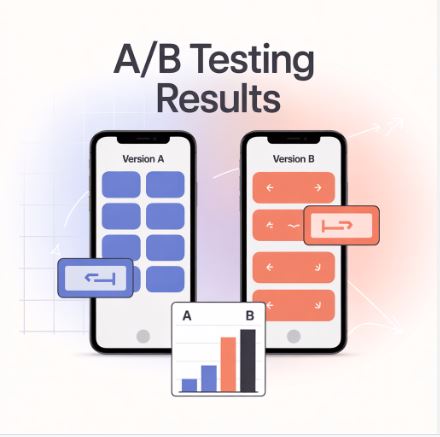
While A/B testing is an excellent way of refining your social media strategy, whether organic or paid ads, unless you track the data and keep refining it, the process can prove useless. This is why you need to understand how to interpret and analyze your A/B testing data. In this article, we will guide you on how to analyze A/B results for crucial insights.
What is A/B Testing Analysis?
A/B testing involves evaluating and assessing the results of an A/B test to determine the value of a tested asset, such as an email, CTA, paid ad, or landing page that will perform better than the other. However, unlike what some marketers think, the process is usually more complicated than just looking at the variant that performed better than the other and implementing it. Instead, it aims at determining the lessons you learnt and found from the test.
While the conversion rate will be the primary lens through which you will analyze your results, you need to examine other KPIs, such as revenue, bounce rate, and click-through rate. Additionally, the A/B testing analysis ensures that the results are valid and quite significant rather than random occurrences.
Why It Is Essential to Interpret A/B Test Results Accurately
When you are able to interpret the A/B test results accurately, you can be assured that you are looking at relevant and valuable data that is representative of your bigger audience.
Here are some key reasons why you need proper data interpretation:
Better Decision-Making
Accurate data can ensure that you are making decisions based on real and tangible performance. This ensures a more effective strategy, higher ROI, and a better customer experience.
Avoid False Positives
If you misinterpret your A/B testing data, you can end up with a false positive: a test that seems to show a winner when the difference was really just chance. A false positive has great effects, resulting in bigger challenges for your overall strategy, lost resources, time, or even worse.
Understanding User Behavior
Through proper analysis, you can gain valuable insights into how your audience interacts with the different variables you are testing. This can provide important insights into the users' preferences, behaviors, and pain points. You can then use the data to improve your marketing efforts.
Statistical Significance
If you have results that hold no statistical significance, the whole process will prove unreliable. It is advisable to understand that the results you get aren't a result of chance. Instead, it enables you to have valid findings.
Enabling Continuous Improvement
A/B testing is not a one-off activity; it is the result of an ongoing process that marketers can use in their conversion optimization efforts. This process cannot be forced without analyzing your results. It can support your continuous testing effort and continuous improvement drive in your business. That means when you are using trusted data, you can help improve it for bigger gains in the long term.
Efficient Utilization of Resources
When you understand the variables that are working well and the ones that aren't, you can allocate your resources more efficiently. You can then focus on the campaigns and tactics that are bringing the best results. This is particularly important if you have a tight budget, where each dollar counts.
How to Interpret Your A/B Testing Results
Here are the steps to follow when analyzing your A/B testing results:
Compare Test Results Versus KPIs
You need to evaluate and assess data based on various benchmarks and metrics to understand the working elements, the ones that need change, and your social media page’s performance. When doing that, ensure that you are tracking the metrics that align with your business objectives. These may include something like conversion rate, click-through rate, bounce rate, scroll depth, retention rate, session duration, abandonment rate, revenue, churn rate, and the average order value.
Check Whether It Is Statistically Significant
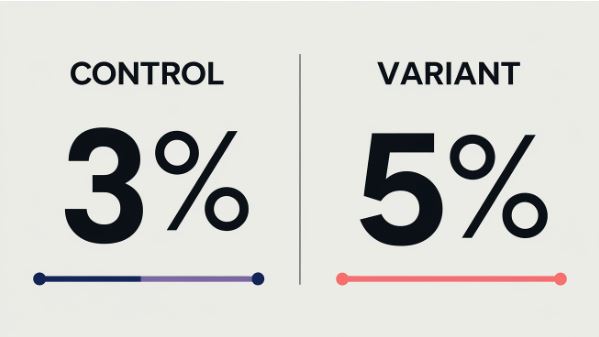
Calculating the statistical significance provides a better sense of the experiment and more reliable and easier-to-follow tests. It shows whether your tests' results are a result of chance rather than the action taken.
Understand the Sample Size
The reliability of the A/B test results will depend on the sample size and the length of time you will be running the test. Having too small a sample or ending the test too soon could mean a lack of enough data to help you make an informed decision. With both options, you may be left with some misleading and inconclusive data.
Consider Internal and External Factors
During the analysis, you will also need to pay attention to both internal and external factors, as these could cause a skewed opinion, faulty assumptions, and findings. Some of the factors to consider include seasonality, marketing campaigns, and technical issues.
Audience Segmentations
Audience segmentations will enable you to tailor your marketing efforts to the right audience. This can involve breaking visitors into different groups depending on demographics, such as gender and age range. This will provide you with insights into your well-performing variants among the subsets, enabling you to tailor the marketing strategy to the needs of each segment.
Use Your Results to Take Action
When you get the clear winner from your test results, this will confirm that your data is reliable and valuable. However, if your results are inconclusive, you may need to test your campaigns and pages further. Ensure that you share your results with the different stakeholders so that each can benefit from them. Such records will also be useful for your figure tests, as you will get a good foundation from which to track your progress.
How to Implement the Results of the A/B Test
Remember that the only reason we are doing an A/B test is to improve your marketing efforts. Therefore, after getting the desired results, you will need to do the following:
Use the Winning Element
You need to ensure that the changes to a variant are both permanent and consistent. At times, this can only involve some simple tweaks to an ad or landing page. However, in others, you can make bigger changes throughout the whole conversion funnel. No matter the option you choose, implement the changes and keep making ongoing changes to the funnel if any issues arise.
Track the Impact of the Changes
After the winning variation has gone live, you need to measure whether it is bringing the expected results. Remember that tracking isn't a one-time affair. You, therefore, need to keep measuring and tracking to ensure you are achieving your goals and everything else is going smoothly.
In Conclusion
Analyzing and acting on your A/B testing results is an important skill for data-driven marketers. This is because it enables you to get essential insights to drive meaningful business interactions. However, for the best results, you need to continue using the data to get insights that bring meaningful business interactions. Therefore, use the tips above to interpret and analyze your A/B testing.


