

One reason many employee advocacy programs fail is that brands often assume employee advocacy is solely about creating posts and asking social media users to share them. With this kind of strategy, you will get reservations from your audience.
A good employee advocacy program should address the questions of what kind of content to post, on which social media platform, and how employees will benefit from the program. In this guide, we take you through the steps of choosing employee advocacy content.
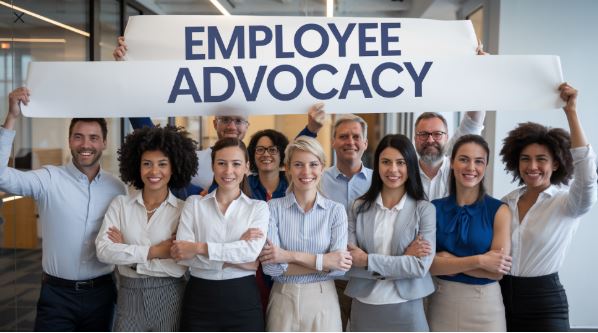
Three Steps to Employee Advocacy Content
When creating a content strategy for your employee advocacy program, use the following steps:
Share the Social Media Policy
You need to ensure a good relationship between employee advocates and the marketing team. You can achieve that by having a social media policy. Ensure you consider the employee’s opinion so they don't feel you are using their social media profiles as an extension of your brand’s account. The policy should also explain that employees need to mention they work for the company when they share posts that promote its products, which is what the FTC's endorsement rules expect.
Explain to them how the employee advocacy program will benefit them in terms of personal branding and even career growth. After that, ensure you have an updated employee advocacy program with all necessary guidelines. This will enable your advocates to understand what is fine and ensure that nothing goes wrong.
You need to understand that a common hindrance to employee participation in an employee advocacy program is employees' fear of making mistakes. This could take the form of sharing incorrect information or getting into trouble with bosses who might think they are looking for a new job. Therefore, you need to alleviate these challenges. After grasping your social media policy, you can now focus on content creation.
Request for Ideas and Suggestions
Should they use short-form videos for lead generation, or consider other LinkedIn content formats? Consider asking this question to the relevant teams. Since social media roles are often assigned to the marketing team, you also need to get the input of your social media advocates. This is important because these are the people who understand their constituencies and audiences better than you do.
You may also ask different departments, such as HR, customer service, and sales, as well as advocates, to provide essential insights on creating content for various audiences. After you provide your advocates with content, ensure that you also get their feedback. Is the content generating interest? What styles, formats, and tone of voice work best for employee profiles? Unless you ask, you cannot tell.
Vary According to the Content Types and Styles
The LinkedIn content format you use for your employee advocacy should be different from the one you use for your brand account. You want to ensure that you create content from a person’s perspective rather than a brand’s. While you need to remain professional, don't hesitate to use emojis and slang when necessary.
You can also pre-create some social media content for employee advocacy. However, to prevent your brand from appearing spammy on social media due to identical posts, you can use different captions and graphics for various types of content. By mixing and matching graphics and captions while adding your perspective, you can create unique posts.

Remember that much employee advocacy happens on LinkedIn, though it also occurs on X in some industries. As mentioned earlier, obtaining feedback from your advocates will help you generate new content ideas and determine the most effective content formats. Ask your advocate about their preferred content format so you can create more of that type.
You might be surprised that your salespeople prefer short TikTok videos, while your HR team prefers long-form LinkedIn content with key takeaways and statistics. Consider creating content for the different personas. When doing that, you can ask yourself several questions, such as:
- What is the most effective content format for helping the sales team generate leads and initiate conversations?
- What is the right kind of content for our HR team to use to demonstrate our company culture and attract talent?
You can also analyze your analytics to determine which content types and pieces are generating the highest interest on social media, in terms of website visits, clicks, sales generated, and leads. Track metrics such as impressions, link clicks, and engagement to determine which content has the most tremendous impact.
You can leverage Google Analytics to view website traffic and engagement rates. Remember that you don't have to create unique content for each advocate, but you should aim to generate the results you need. A good idea is to use a LinkedIn content calendar.
Enable Easy Content Distribution
If you create a bottleneck for employees to join and distribute content, you will struggle to get them to join the program. Remember, some team members, such as executives, can be pretty busy. You need to make it relatively easy for them to join the program. You can use the best employee advocacy tools to streamline the process.
If they can share your content with a click or two, it will be easier for employees to share it. That's why you may also need employee advocacy software. You don't want to be in a situation where you have to send tens of thousands of emails reminding employees to share the new content.
You can use a tool such as Slack to share the latest content and to recognize employees' efforts. This could be through a thank you or a shoutout, which will motivate employees to keep posting.
In Conclusion
While an employee advocacy program enables you to amplify your brand's reach, this is only possible with the right content strategy. Without one, your advocacies will appear disorganized and ineffective. This can result in lower participation levels, and you may miss opportunities to generate leads, build brand awareness, or enhance recruitment.


