
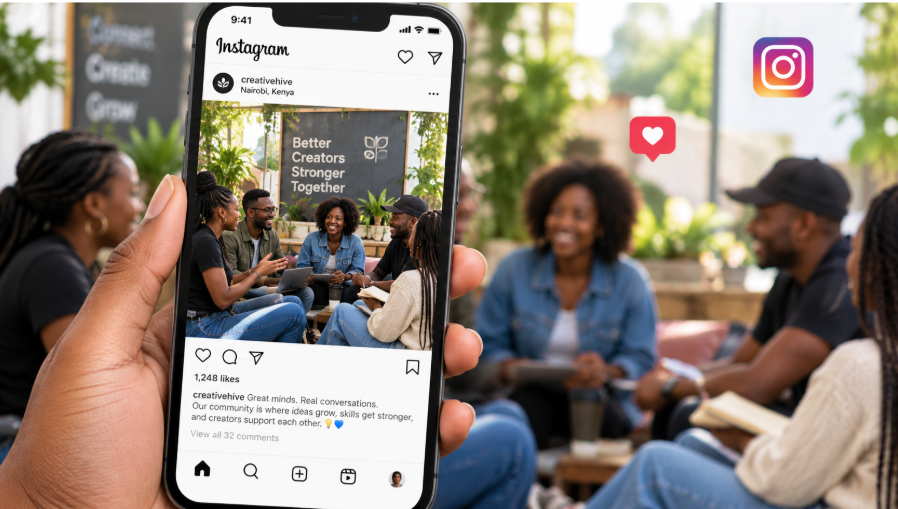
There was a time when social media success was defined by the number of followers your account had. Brands and creators believed that the more the number of followers they had, the more reach and authority. However, the social media algorithm started prioritizing engagement over followers, meaning that higher engagement is now more important than the number of followers.
If you want to drive engagement on social media, you need to make people feel that they have a sense of belonging. Since social media users are constantly bombarded with ads, they are now seeking a sense of belonging, leading to a need for community-first social media rather than following. In this article, we guide you on the role of community-building in trust-building.
What is Community Building on Social Media?
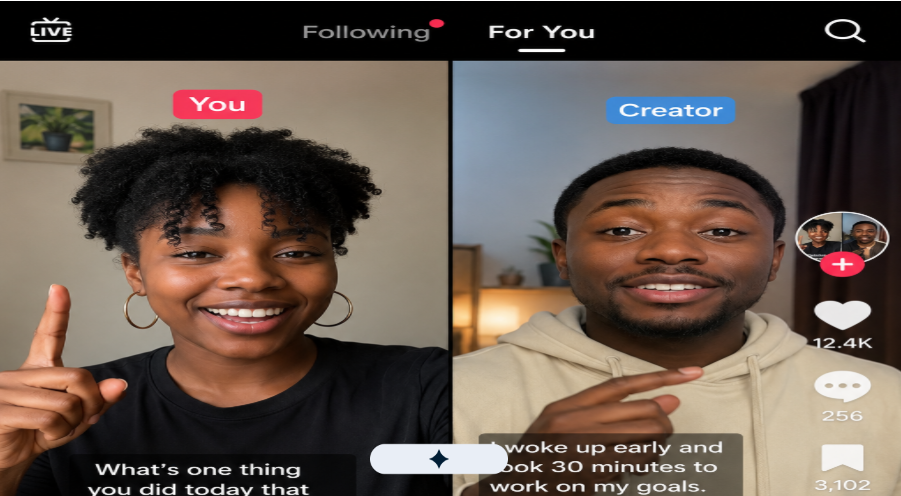
A common misconception that social media users have is that building a community is about creating a Facebook or Slack group. However, this isn't the true definition of a community. A community refers to a group of people who are connected by the same interest, challenge, or shared purpose, interacting with one another to provide each other with gainful knowledge.
A community is different from an audience because of participation. While social media audiences consume, communities are contributors. There are several elements that contribute to a successful community.
These are:
- User experience
- Constant value
- Trust-building
A community can be on different platforms, such as social media, websites, or private platforms. That means the key element of a successful community isn't the platform but the intention behind the community. Instead of being designed, strong communities are usually improved. They have a reason for existing, providing instant value and a structure that ensures rewarding and more natural participation. They can be a good source of audience insight for creating better content.
Differences Between a Community and an Audience
If you are wondering how a community differs from an audience, here are some key differences you need to understand:
- An audience is a consumer of content, while a community is a participant.
- A community will interact with your content, while an audience only listens.
- A community has a sense of belonging, while an audience is only followers.
While these differences might look minor, they often have great outcomes. For instance, if you are a creator with 200K followers, you can get attention. But if you are a creator with a community of 10K highly engaged followers, you can quickly build a business. In most cases, engagement can matter more than just size.
Why Communities Have Become More Valuable Than Large Audiences
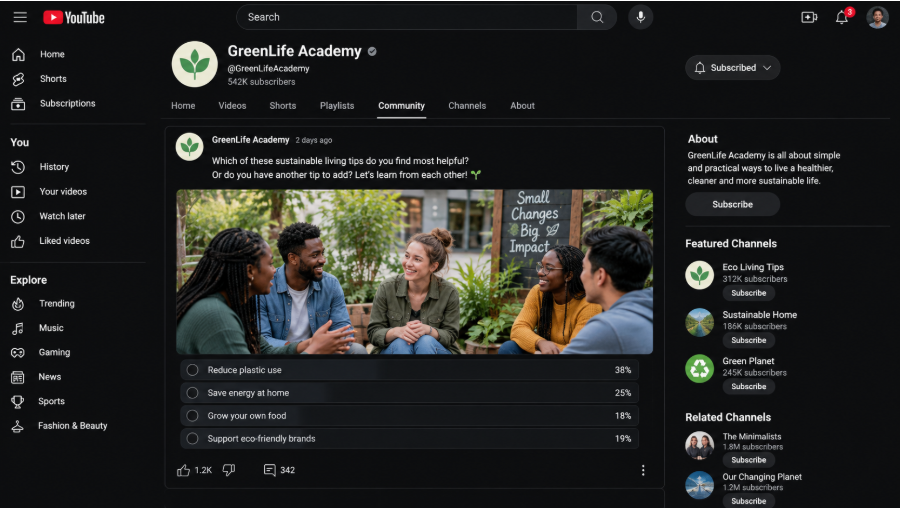
While having a big audience is great, a more engaged community provides more value. That means when your brand focuses on building valuable relationships rather than going after vanity metrics, it's likely to experience more loyalty, higher engagement, and better business results. That means the question your brand should have isn't the number of followers it has, but how many of those followers are truly engaged or care about the content you are sharing.
Unlike what many think, a high number of followers doesn't mean a more engaged audience. If you have people scrolling past your content without engaging through liking, commenting, saving, or sharing, it will result in a declining reach. This will negatively impact the reach of your content, especially because social media algorithms reward content that sparks engagement and drives conversation. That means when you have a small and more active community, you can easily outperform a bigger audience that doesn't interact.
A community can be an important source of feedback, providing you with some qualitative insights. You can study the motivational language and unmet customer needs in real time. Finally, community building can prevent your audience’s emotional switching. When people connect with your brand, it becomes harder for them to leave. This sense of belonging is something hard for your competitor to copy.
Benefits of Communities Over Large Audiences
If you are wondering if there are any benefits of having communities instead of a large audience, here are a number of them you need to know.
Better Trust-Building
In a crowded digital environment, it has become harder to earn more trust. Despite the lasting importance of trust, it is increasingly reduced online due to the massive amount of information and the rise of AI for content creation. Every day, there are now millions of social media posts, articles, and videos all competing for the audience’s attention. With the abundance of information, genuine relationships have become more important.
People now trust the recommendations of their close friends and family rather than ads. They trust content where they participate rather than promotional content, and the community helps to deliver all this. A community can help with peer-to-peer validation, providing shared experience and more honest conversation than what can be delivered by landing pages.
For people to support your brand, they need to feel connected to it. They want to work with brands that listen to them, educate them, and provide them with opportunities to drive some meaningful interactions. Community-building requires you to create a space where your social media audience feels more secure when sharing their experiences, asking questions, or learning from one another.
There are different ways of strengthening your community, such as:
- Responding to your audience’s direct messages or questions.
- Asking some thoughtful questions.
- Highlighting great customer success stories.
- Hosting Q&A and live discussions.
- Encouraging your members to share their experiences.
When people see the value, they can turn into strong brand advocates.
Driving Better Business Results
In recent years, the customer acquisition cost has been rising as a result of more competitive paid media, a lower audience attention span, and a less linear conversion path. Having a community can help improve customer lifetime value and retention, mitigating the pressure for constant growth at the top of the funnel.
Therefore, communities can be a great source of repeat customers, referrals, and even long-term loyalty. When you have some members of an engaged community, they are more likely to:
- Share your content.
- Take part in discussions.
- Recommend the business to other people.
- Add additional products and services.
They are also likely to turn into followers. Therefore, community-building can be key to building a loyal audience on Instagram.
A Relationship-Driven Social Media
In recent years, social media platforms have been focusing on features that drive meaningful interactions, such as comments, shares, DMs, and saves. When the social media algorithm realizes that your content is driving this engagement, it interprets that as a sign that you are creating high-quality content. Therefore, instead of focusing on growing your following, your focus should be:
- Providing your audience with valuable content.
- Driving conversations.
- Creating a sense of belonging.
When you do that, you can make your audience feel they have a sense of belonging, build a stronger community, and drive more engagement.
Position Your Brand as a Valuable Resource
For your community to succeed, it should be built around collaboration, educating one another, encouraging each other, and shared interests. When you provide your members with such valuable content, you provide them with a reason to keep coming back rather than just consuming the content. When you position your brand as a valuable resource and a place where like-minded people can connect, you can naturally grow your influence. You can turn that community into a valuable business asset, as it enables you to build relationships with your audience that grow beyond the single post.
Drive Customer Retention
While brands need to find new customers, they also need to focus on keeping the existing ones. A good community-building strategy can make your audience feel more connected to your brand instead of feeling like the relationship is transactional.
A community will help you develop a better relationship with your audience for several reasons, such as:
- Participating in discussions.
- Contributing to your content ideas.
- Getting more value than just the product
This means the community can become part of your product. When your brand creates space for some meaningful conversation, it can easily gain an advantage.
A Source of Valuable Feedback
One of the challenges that businesses often face is understanding what customers really want. When you have a strong community, you can have direct access to customers’ opinions, frustrations, ideas, and conversations. This feedback can help to improve your customer experiences, products, or services. Rather than just guesswork, your business can learn from the engaged members, resulting in a cycle that requires continuous improvement.
With an engaged community, it becomes easier for your business to market. The happy customer becomes a brand advocate who shares your content and invites other members. This results in natural word-of-mouth marketing resulting from communities offering genuine value.
Final Thoughts
Despite the importance of follower growth, the growth of your community is what will drive long-lasting success. When your business invests in a lasting relationship, you can build a strong brand for the future. This is why a strong community is better than a large audience, especially in an era when social media platforms are prioritizing engagement over follower count. Therefore, go ahead and build a community to help take your brand to the next level.


