
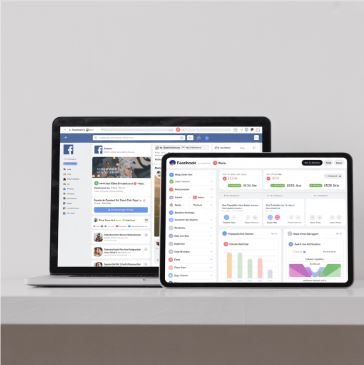
For years, Facebook Pixels has been the gold standard for helping people understand the performance of their ads and to create their retargeting audiences, making it perfect for Facebook ad targeting. However, the development of iOS 14 made the Facebook pixel less effective. With the privacy features in the operating system and the killing of cookies, it has become harder for Meta's algorithm to collect ad data.
To address this challenge, Facebook introduced the conversions API, a tool that helps advertisers track conversions correctly. It has also been proven essential for Facebook advertisers seeking to future-proof their brand in a world where privacy is taking center stage. In this article, we guide you through the Facebook Conversion API and tell you why it is key in your ad strategy.
What is the Facebook Conversion API?
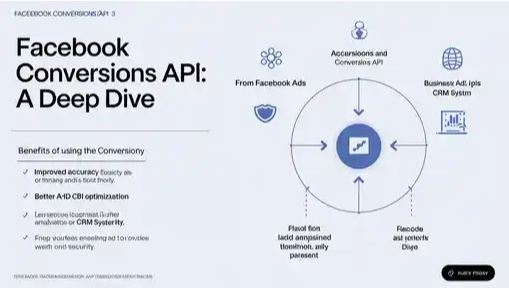
Facebook defines conversion API as a business tool that allows users to share their essential online and offline events, or customer actions, directly from your own server to Meta. To better understand the term, let us look at the meaning of these terms:
- API. This refers to Application Programming Interface (API), a connection between two interfaces that allows them to communicate with each other, in this case, Facebook and your site.
- Online and offline events. This refers to the actions visitors take on your site, such as filling out a form or viewing a page, which constitute online actions. Offline actions refer to people who interact with your ad outside online platforms, such as making a call.
- Server. This is the hardware that will host your site and its data. You can host your own servers if you are a large business, but smaller businesses typically use servers hosted by third-party platforms, such as Bluehost and GoDaddy.
- Meta's servers. This is where your event data ends up, so it can be used for ad measurement and optimization in Ads Manager.
Now you can see where we are heading. The role of the Conversions API is to connect Facebook Ads Manager with your website data, providing a better view of how Facebook users interact with your ad. It is an essential tool for creating Facebook video ads that convert.
Events to Track with the Facebook API
Conversion API tracks the same events that Facebook events are tracked. These include:
- Sharing information.
- Adding to Wishlist.
- Adding to Cart.
- Donating.
- Product customization.
- Registering.
- Leads.
- Contact phone, email, SMS, and chat.
- Checkout Purchase.
- Page views.
- Appointment scheduling.
- Application submission.
- Starting trial.
- Subscribing.
- Viewing content.
Unlike the Pixels, where these events are browser or client-side, with API, these events are tracked on the server side.
Importance of Facebook CAPI
What are the benefits of the Facebook Conversion APIs? Here are a number of them:
- Overcomes the challenges of VPNs and ad blockers. While Facebook provided all the information we needed to build powerful audiences for our ads, this also brought the challenge of discrepancies appearing as a result of VPNs, ad blockers, and other factors. The good news is that CAPI helped to solve the problem.
- iOS 14 compliant. We noted earlier the gaps introduced by the development of iOS 14, which focused on data privacy, limiting the data that clients' cloud collects through pixel tracking. This resulted in gaps in the Facebook ad targeting. However, CAPI collects users' data from the business server, rather than from the user's device. This means it doesn't rely on browser data or cookies, and you will be responsible for collecting data before passing it on to Facebook.
- Lower-funnel activity capturing. Through the Facebook CAPI, you can send more than the website behavior to Facebook. Since some server-side events may happen outside your website, such as apps, offline, support hub, or third-party tools, you can record the data in the CRM to be passed on to Facebook. With events in the shopping cart and payment being lower-funnel, these can be especially important to track.
- Less dependence on cookies. Browsers like Safari and Firefox already block third-party cookies, so server-side events help fill the gaps in measurement.
Facebook Conversion APIs vs. Pixels
While Facebook Pixels serve the same role as CAPI, it does that differently and bring different results. The Meta Pixel is a piece of code added to your website that sends browser events to Meta's servers. That means it captures when someone interacts with your Facebook ad or takes another action. Since the cookies are captured in the user’s browser, these are browser-dependent, and that is why they are known as browser-side conversion tracking.
On the other hand, Conversions API is server-sided. While they track similar events, these are stored on the server instead of a browser, with the API connecting the server to Facebook.
Benefits of Combining Conversion APIs and Pixels
While CAPI will track most standard events, there are certain situations where Pixel has benefits. For one, it can match the visitor to a Facebook user. This provides you with additional information on the people who interacted with your ads, including their psychological and demographic details. Therefore, a good idea would be to combine both for several reasons, such as:
A Full Conversion Picture
CAPI will capture information that Facebook pixels cannot capture due to ad and cookie blockers, as well as information blocked by iOS 14, including CRM data, offline events, and website events. On the other hand, the Facebook pixel will show you some information that isn't visible in the API, such as demographic and psychographic data.
Cookies Are Still Working
Cookies still work in many browsers, and Google decided in 2025 not to force the end of third-party cookies in Chrome. The Pixel therefore still collects useful data, and Meta recommends running it alongside the Conversions API. Either way, only send data your visitors have agreed to share under your consent banner and privacy laws.
Budget Optimization
As of now, it’s clear that the combination of CAPI and Facebook Pixel is the most effective way to obtain the most accurate data. It can help you get critical insights for:
- People interacting with your ad.
- Customer buying journey
- Building communities and getting more leads on Facebook.
- Allocating the budget more effectively and optimizing it using data.
In Conclusion
You probably already understand what Facebook pixels and CAPI are and why you need to use them both. In fact, this is one of the best ways to future-proof your Facebook marketing strategy. Additionally, you can collect more data, and you will continue to collect data after the cookies are no longer in existence.


