
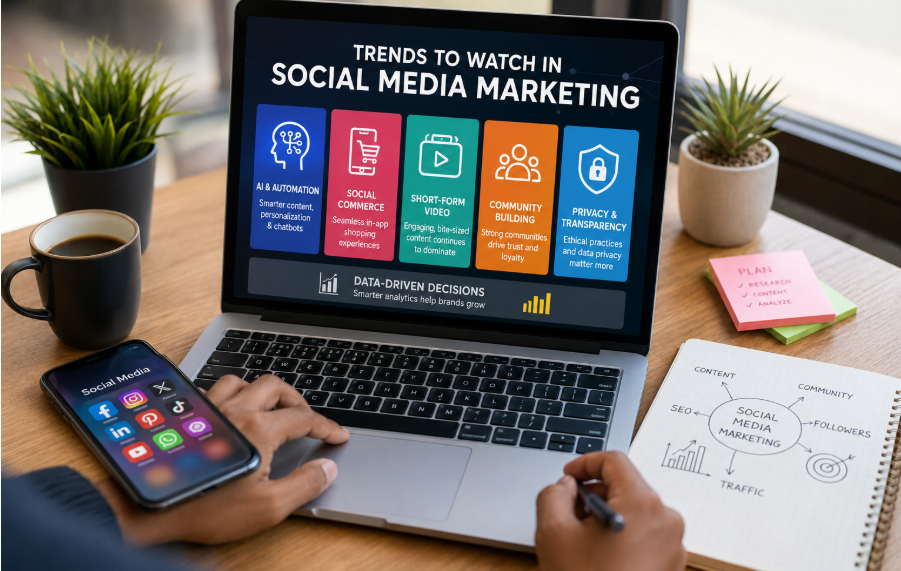
Like any other technological invention, social media is now a constantly evolving field. From the early days of MySpace and Facebook to the domination of video and image content, it has now evolved into a one-stop space for connection, entertainment, and even shopping. Additionally, technological advances, changing user behavior, and emerging tools continue to transform how social media works.
That means if you don't remain abreast of the latest social media trends, you are likely to fail in your social media strategy. While AI adoption has evolved at a tremendous speed on social media platforms, it seems to be reaching its peak due to the rise of AI Slops. Join us in this detailed guide as we explain the latest trends impacting social media marketing.
Why Do You Need to Understand Social Media Marketing Trends?
Social media trends matter for several reasons, such as:
- Shaping users’ expectations. Unless you understand the latest social media trends, it can be hard to understand user behavior. In an era when the feeds are dominated by short-form videos, users are beginning to expect brands to also appear in the same way.
- Influence engagement. No doubt, trending content attracts a high engagement rate, whether in the form of memes, remixes, or filters. Therefore, you can increase your engagement by creating more trending content, which can be a good strategy for making your Facebook Reels go viral.
- Impact the platform's algorithm. Different platforms, such as Threads and Reels, often give priority to new features. If you want to remain relevant, make sure you adapt to the needs of the algorithm.
- Cultural edge for brands. When your brand creates content that resonates with its target audience, it's easy to make the brand feel connected with its target audience and up to date.
- Get opportunities to get creative. Tracking trends can help to push your brand outside its comfort zone. This creates an opportunity for storytelling that is fresh, human, and relevant.
Top Social Media Marketing Trends in 2026 and Beyond
Now that we understand why you need to track social media trends, let us look at some of the top trends to watch in 2026 and beyond.
AI-Generated Content Fatigue
In recent years, the rise of AI-generated content has undoubtedly been one of the biggest trends we have witnessed. From text posts to AI-generated videos, social media feeds have been filled with AI content in the past few years.
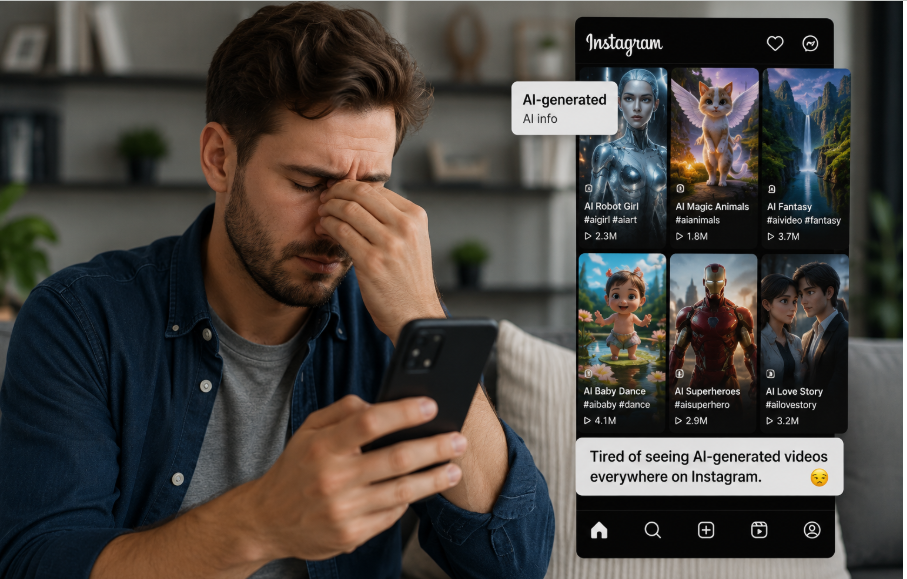
In fact, this has caused social media platforms to incorporate features such as Vibe, a dedicated feed for creating and posting AI-generated videos. OpenAI also launched Sora 2, an app that features a TikTok feel but with an AI focus. The app has already reached over 1 million downloads.
However, the hype around AI-generated content seems to be dying down, driven by several factors, such as:
- Rise of AI fatigue and slop. In recent years, social media has been flooded with AI-generated and repetitive slop. Since the models are usually trained to predict common answers, this often results in unoriginal and bland content, which makes users lose interest.
- Algorithm penalties. The top social media platforms are penalizing inauthentic and recycled content. This means the use of AI to create content no longer guarantees that it will drive website visits and views.
- A focus on metrics over magic. When AI was introduced, users were excited by the magic of chatbots. However, today, AI is seen as just another software rather than magic.
- Data cannibalism. Some studies have warned about the possible collapse of models that are trained on already existing data on the internet. With the internet getting heavily filled with AI content, there is a possibility of degradation as new models are trained on data from old models.
According to a Sprout Social report, social media users want brands to focus more on human-generated content. This can be attributed to the fact that social media users are experiencing fatigue from generic AI-generated materials. When content feels completely automated, with no human touch, social media users easily take note. Therefore, if your brand relies too heavily on AI, it can end up diluting its brand voice and losing its authenticity and differentiation.
The Future of Social Search
In the last few years, social media has increasingly been functioning as a search engine. According to Forbes research, 25% of users now use platforms like YouTube, Instagram, and TikTok to search instead of Google, a growing trend especially among younger audiences. Another study by Pulse Survey shows that one in three consumers is skipping search engines and instead prefers to search directly on social media platforms like TikTok, YouTube, and Instagram. The information they are searching for isn't only entertaining, but they are also looking for product demos, real solutions, and peer validation.
This indicates that traditional SEO is now fueled by social search. To determine authority, factors such as social shares, engagement, and virality impact EEAT and brand visibility. Additionally, large language models have transformed the discovery of information; social media posts are now appearing more in search results.
Therefore, the kind of content brands publish on social media will impact their discoverability and be referenced by social media and AI-driven search tools like Meta AI and Google AI Overview.
That means in 2026 and beyond, the brand’s social search strategies should focus more on meeting the needs of the platform algorithms. The focus should be on building content that can be easily found, making every post an opportunity to grow. That means when brands leverage social search, they can benefit from a higher level of brand awareness, visibility, and a higher level of engagement compared to when they use traditional SEO strategies.
A Shift in Authenticity Over Polished Content
For many years, brands focused on creating the perfect content that resonates with their target audience. This means the days when brands and creators used filters and Photoshop are gone. When browsing through the feed, you will notice that those perfect and curated posts aren't the ones bringing in the views. Instead, raw and relatable content seems to be generating a lot of engagement.
This shows that authenticity on social media is now the foundation of driving meaningful engagement between brands and audiences. If you want to take your brand to the next level, you need to focus on creating authentic content. This kind of content has been noted to foster more engagement, trust, and long-term loyalty, unlike curated, overly polished content.
Why the Shift Toward Authentic Content
Authentic content has been noted to be effective because of its ability to foster an emotional connection with audiences. When social media users see that the content you are making feels genuine and relatable, they begin to trust your brand. This trust acts as the foundation for loyalty, ensuring that your audience doesn't just feel like they are consumers but become long-term brand advocates.
However, it's worth noting that authenticity doesn't mean your brand should cut corners. Consumers still want to see quality content. If you post a sloppy or blurry photo, it won't resonate with your target audience just because it's unfiltered. The most effective content is the one that combines authenticity with thoughtfulness, while still being genuine and relatable.
Additionally, people get drawn to content and stories that show human imperfections. Therefore, create content that contains flaws, vulnerability, and moments of real-life experiences, instead of highly polished content. In a world saturated with ads, authentic content feels more relatable and genuine.
Brands are already discovering the power of the shift toward authentic content. They are now using behind-the-scenes content to showcase the people and processes that make their company unique. By posting user-generated content, they enable customers to view themselves in the brand story.
Brands can post unscripted stories, whether of a team celebrating their win or an honest product demo. Such content can be among the right TikTok video content ideas for B2B brands.
It can result in higher engagement compared to well-staged campaigns. This means that authenticity tends to feel more personal and helps keep audiences coming back.
A Focus on Community Building Over Virality
In this AI era, cases of social media saturation are real. Content cycles are moving faster than ever, while social media trends offer brief, fleeting moments. Social media users are struggling to keep up with content, let alone engage with it.
According to social media experts, brands need to think of a good way of driving engagement among their audiences, who are already suffering from content fatigue. One of the ways they can do that is by creating less frequently but with more purpose. Additionally, they need to treat their audience as a community and not as customers.
A social media community is a group of people who are brought together by a common value, interest, or brand on a platform like Facebook, LinkedIn, or Instagram. They differ from simple audiences and followers, as they tend to interact with the content, take part in discussions, and contribute their own feedback and posts. This kind of two-way engagement acts as the foundation of a successful community where the brand feels it can communicate, listen actively, and even respond.
B2B brands or utility brands can increase loyalty by showing what they stand for. They can provide inside jokes for their audiences that make them feel like insiders. This is a powerful content marketing technique that enables brands to create content that directly resonates with the target audience. Brands can create different kinds of social media communities to support their business goals.
These can include:
Brand Communities
These are communities that are usually built around the mission, products, or services of a brand. For instance, if you are a skincare brand, you can create a community where your audience shares their routines, results, and reviews. This can help you get important feedback from users, drive loyalty, and encourage word-of-mouth referrals.
Support Communities
These communities usually focus on helping users to answer questions or solve problems. For instance, if you are a SaaS platform, you can create a LinkedIn group where users can share tips and troubleshoot issues. This can help you reduce the number of customer service requests using shared knowledge.
Ambassador Communities or Advocacy
These communities aim to engage influencers, ambassadors, and brand advocates to promote your brand. For instance, if you are a fitness clothing brand, you can invite your loyal customers to share product images and review your products in return for perks. If you reward reviews, ask for honest opinions, not positive ones, and make sure the reward is disclosed. This can increase your organic reach and ensure authentic promotion through the use of top trusted voices.
Interest-Based Community
These are communities that are usually centered around certain causes, lifestyles, and interests rather than a product. For instance, if you are a travel gear brand, you can foster a sense of community among adventure travelers by having them share their travel tips and stories. This positions your brand as part of the lifestyle while sharing your audience’s interests.
Professional/B2B Communities
These are the communities built around professional development or shared industries. For instance, if you are a digital marketing brand, you can create a LinkedIn group where marketers can exchange insights. This can help you foster better relationships, increase brand authority, and bring more B2B leads.
The Rise of Conversation Content Marketing
The days when brands treated social media platforms as broadcasting tools are long gone. Today, the focus is on conversational content marketing, where the focus is on treating the comment section as a channel for revenue generation. According to one study, around 27% of consumers are already interacting with brands through direct messages and chatbots. Other statistics indicate that about 52% of consumers who get a real-time response see a higher level of brand loyalty. Leveraging conversational engagement can reduce the decision cycle and increase the level of trust.
Conversation marketing involves engaging consumers in real-time across different digital channels such as live chat, messaging apps, and top social media platforms. It focuses on providing a personalized and interactive conversation that looks like a traditional human conversation, ensuring instant response, tailored recommendations, and valuable assistance. This ensures that you create stronger relationships with your customers, increasing brand loyalty and driving engagement.
The top brands are now combining human oversight with automation to drive private conversations from public engagement. By using a method that encourages users to leave a message or a comment, you can serve two roles:
- Show the platform algorithm that you are driving strong engagement.
- Move the high-intent users to a one-on-one conversation where you increase the chances of conversion.
There are different ways in which brands can use conversational marketing, such as:
Using Chatbots to Engage Customers
Brands are now leveraging AI-powered chatbots to handle different customer issues, from recommending products to tracking orders and providing customer support. These tools use machine learning and NLP to better understand the customer’s queries, offer them relevant information, and ensure autonomous transaction completion.
With consumers searching for a seamless experience and instant gratification, chatbots ensure that businesses can offer an efficient and cost-effective way of delivering more support and assistance 24/7.

Using Messaging Apps to Communicate with Customers
Many social media users now prefer communication through messaging apps, as these offer a feeling of immediacy, convenience, and privacy. When messaging apps are added to conversational marketing, it becomes possible for businesses to engage with customers through real-time conversation, providing them with more personalized promotions and offers. It also enables them to provide timely customer care and support.
Some of the top messaging channels that brands use include WhatsApp, Facebook Messenger, and WeChat, providing an instant communication line, ensuring a deeper connection, and increasing engagement and conversion.
Contextual and Personalized Marketing
By using conversational marketing, you can drive a personalized experience that matches the unique preferences of the customer, purchase history, and behaviors. When you leverage customer insight and data, you can segment your audience, ensure personalized messages, and provide them with targeted recommendations and offers that resonate with the unique interests and needs of your audience.
Whether your goal is to address customers by name, recommend products they've purchased in the past, or provide them with relevant content, personalization can help increase conversion and engagement, which is important in conversational marketing.
Employee Advocacy and Founder-Led Marketing
Another social media marketing trend we will continue to see in 2026 is a reduction in the number of faceless brand videos. In 2026, one of the trends that is emerging as a high-impact growth and marketing opportunity is the rise of employee advocacy and founder-led marketing. Compared to traditional marketing messages led by brands, community-driven and authentic messaging is outperforming traditional messaging led by brands, as some are generating leads of more than 25%.
About 76% of your ad audience say they trust content created by employees compared to that of brands only. This can be particularly beneficial for B2B marketing, where, in 2026, the most effective strategies are those that engage internal staff such as founders, leaders, and the front-line employees who act as the brand’s representatives.
Founder-led marketing and employee advocacy work for several reasons, such as:
- Builds trust through transparency and vulnerability. Successful founders often share their struggles with failure, financial challenges, and anxiety alongside their wins. This results in deeper emotional connections compared to those polished corporate messages.
- Offers more credibility and trust. As the founder provides industry insight, their messaging is seen to be more credible compared to other marketers. This is because they are the people who discovered the problem, created the solution, and focus on the challenges every day. Therefore, audiences can trust the content shared by them more.
- Agility and speed that can't be matched by corporations. Founders can address concerns, respond to trends, and change messaging without having to navigate different approval processes and brand guidelines. Such responsiveness is important in fast-moving fields where success is often a result of timing.
Founder-led marketing isn't about the occasional social media posting or giving an interview. It is a strategic method where the personal brand of the founder acts as the growth image for driving brand awareness, increasing the level of trust, and increasing conversion.
This works because it leverages the most important elements not found in corporate content: human authenticity. When social media users find there is a real person behind a brand, they feel they are joining a mission led by someone they already know and trust.
The Rise of AI Agents to Help with Shopping
The rise of AI-assisted shopping began with traditional chatbots and recommendation engines. However, in 2026, this has evolved to become a full-fledged tool to help shoppers understand various factors, such as:
- Personal budgets and references.
- Comparing the prices of different retailers.
- Complete the user’s purchase process.
- Brand negotiations.
Therefore, AI agents have helped to make the online shopping experience faster, easier, and more personalized. Instead of users navigating different websites, AI agents are helping shoppers to find, evaluate, and even buy products online. In the future, many sales assistants won't be human but AI agents.
This also means that brands should position themselves in a way that enables them to be discovered by the shopping agent. This is key, as visibility will not be limited to the search results, ads, or feed. It will extend to the level at which your brand will be ranked, recommended, and interpreted by the LLMs (Large Language Models), raising the need for ranking in AI searches.
The Rise of Shoppable Videos
In recent years, short-form videos have transformed B2B marketing. Additionally, shoppable videos are transforming how the e-commerce industry works, providing users with interactive and dynamic shopping experiences that enhance conversion rates and engagement levels. This differs from traditional video marketing, which can drive engagement three to four times, capturing the attention of the user and encouraging interaction with content. This higher engagement often leads to higher conversion rates, making shoppable videos a more effective tool.
Shoppable videos are effective because they let people go from watching to buying in a couple of taps. Brands that use them often report higher purchase intent than with static product images.
By adding clickable links to products in their video content, shoppable videos can streamline the purchasing path, enabling viewers to buy items directly from the video. Such a seamless integration can improve the shopping experience, minimize friction, and increase conversion. Therefore, these shoppable videos are a shift in how e-commerce and social shopping are done.
In Conclusion
If you want your brand to remain visible, relevant, and competitive, you need to understand the latest social media trends. Doing so will enable you to align your strategy to meet changing consumer behavior and keep adapting to algorithm changes. You will also be better positioned to reach your target audience on the platform they are spending time on.


