

You have probably noticed it. Some creators seem to rise everywhere at once. A clip takes off on TikTok, and a week later the same person is all over Instagram Reels and YouTube Shorts too.
People call this creator velocity: how quickly attention around a creator grows. It’s not an official metric on any platform, but it describes something real. Each platform pays close attention to how fast people react to a post, share it and come back for more.
Does a win on TikTok make Instagram treat you better? Not directly. The platforms are linked through their audiences, not through their algorithms. TikTok, Instagram and YouTube don’t share ranking data, and each one ranks your posts using its own signals. What crosses over is people.
Here is what velocity means in practice, why it matters on each platform, and how it spreads from one app to the next.

What Creator Velocity Means Today
Creator velocity is the speed at which your presence grows. Inside each app, it shows up as signals the platform can measure: how quickly people watch, share, save, comment and follow after seeing your content.
Recommendation systems test new posts with small groups first. If that group reacts well, the post gets shown to more people, then more again. A strong start can therefore carry a post far beyond your followers.
That’s why smaller creators can break through quickly now. On TikTok, Reels and Shorts, a post from a small account can outperform one from a big account if people respond to it more strongly.
Why Platforms Reward Speed More Than Ever
Platforms compete for attention, so they push content that keeps people watching and sharing.
Quick reactions tell a platform that your post interests people. They can also mean you tap into culture at the right moment, which is often what makes a campaign spread.
When that happens, the post gets more distribution: second and third waves of testing, sometimes in new regions, often with people who don’t know you yet but behave like those who already engaged.
How Momentum Spreads From One Platform to Another
Platforms don’t share data with each other, and there is no combined ranking across apps. Momentum still travels, because the same people use all of them.
Someone who sees you on TikTok might search your name on Instagram, follow you there and watch your Reels. Instagram then sees a new follower who engages with your posts, and it ranks you accordingly. The lift is real, but it comes from people, not from the platforms talking to each other.
Attention outside the apps plays a part too. Press coverage, Google searches and people sharing your links all shape how people see you, and they send new viewers to whichever platform they prefer.
Why More Posts Create Faster Velocity Across Platforms
One big moment rarely builds lasting momentum on its own. Repeated posting does, because every post is another chance for someone new to find you.
Posting more doesn’t mean posting anything. It means staying present long enough for your audience to keep finding you and coming back.
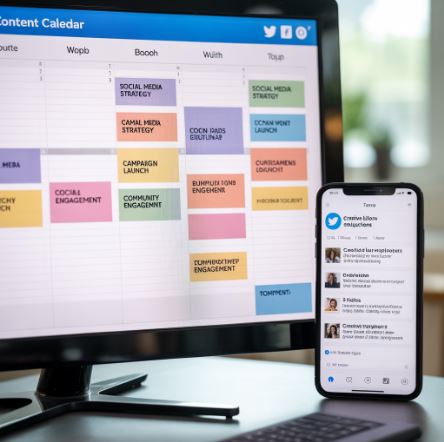
A steady cross-platform rhythm usually beats short bursts of effort. Regular posts on each platform give every algorithm fresh material to test and give your audience a reason to look for you.
How Audience Behavior Creates Cross-Platform Lift
Your audience doesn’t stay in one place. People see you on TikTok, look you up on Instagram, then catch a Short on YouTube.
Each of those visits counts on the platform where it happens. When the same people follow and engage with you in several apps, every one of those platforms has a reason to show you to more people like them.
So make it easy to follow that trail: use the same name and profile photo everywhere, link your accounts in your bios, and mention where else people can find you.
Why Early Engagement Matters More Than Ever
The first hours after you post matter on most platforms, because that’s when the system decides whether to test a post with more people.
Real responses from people who care about your content are what count: watching to the end, commenting, sharing. Post when your audience is online and reply to early comments to keep the conversation going.
How Creator Velocity Impacts Long-Term Ranking Stability
Momentum also helps over the long run. An engaged audience that keeps coming back means your new posts start from a stronger base.
That cushions quieter weeks. Followers who regularly engage will still see and react to your posts, which keeps each one in the running for wider reach.
Building a Multi-Platform Strategy That Supports Velocity
To build momentum, you need a rhythm that works across platforms and that you can keep up.
Post consistently and keep each platform active. Adapt ideas to each format instead of copying the same file everywhere, and use what works on one app as inspiration for the others.
The best multi-platform plans are simple enough to maintain during a busy week. A plan you can stick to beats an ambitious one you drop after a month.
Conclusion
Creator velocity isn’t a ranking signal you can look up anywhere. It’s a way of describing how quickly attention builds around you. Each platform ranks you on its own, but people carry that attention from one app to the next.
So you don’t need to game anything. Post often, show up consistently, make yourself easy to find everywhere, and let your audience follow you from one app to another.


