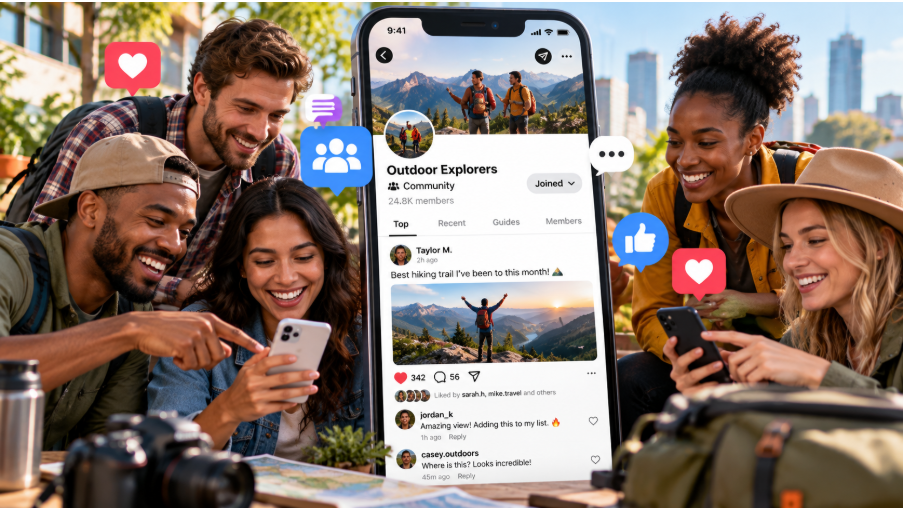

Social media pages show up in Google results more and more often, from Reddit threads to TikTok videos and Instagram posts. That means when you create social content, you should think about both your audience and search engines.
When building a social media cross-promotion strategy, one major consideration is how Google and other search engines treat duplicate content. Join us as we explore the impact of duplicate content on SEO.

What is Duplicate Content?
Duplicate content refers to content appearing on more than one platform on the internet. This can be on the same website, a different website, or social media platforms. The goal of a search engine is to provide users with unique and helpful content. When multiple pages contain similar content, this can confuse search engines and affect SERP rankings.
Duplicate content means substantial blocks of content that match, or are very similar to, other content on the same site or on another site. Google doesn’t publish a percentage threshold. According to Google, common examples include:
- Content copied from another site in large blocks, rather than briefly quoted with credit.
- Multiple URLs that point to the same page are treated by Google as two distinct pages.
- Repetition of the content title or meta description tags throughout the site.
Plenty of duplicate content is perfectly normal and not deceptive, for example:
- E-commerce sites that list items for sale under different URLs.
- Different printable versions of the same web page.
- Distinct pages for mobile and desktop.
Google treats this kind of duplication as non-malicious. When it finds several versions of the same content, it picks one to show in results and filters out the others.
Is Publishing Your Social Media Page Considered Duplicate Content?
Let’s assume you write a LinkedIn article that goes viral, and now you want to publish it on your website as well. If the two versions are nearly identical, search engines will see them as duplicates and usually show only one of them.
Google doesn’t penalize this unless the duplication is meant to manipulate rankings, but it can still affect your SEO efforts. For instance, you might find that your own blog is outranked by your LinkedIn profile.

Impact of Duplicate Content on SEO
Duplicate content can negatively impact your SERP rankings, whether the duplication occurs externally or internally. Internal duplication occurs when your own pages cannibalize one another, which can affect rankings. If your pages are experiencing external duplication, you might find that another page’s copy is what ranks compared to yours. You can face other challenges on your site, such as:
- Diluting the power of backlinks. Backlinks refer to links from other websites pointing to your site. When you have identical pages receiving backlinks from the same website, you split the link juice rather than having it all go to the same URL.
- Affect your crawl budget. Search engine bots usually allocate time and resources to crawl your website, which is called the crawl budget. When they have to crawl multiple versions of the same content, this can prevent your important pages from being indexed, especially on a large website.
How to Cross-Promote Social Media Content Without Duplicate
Social posts themselves rarely cause SEO problems, but copying the same text everywhere can make one version outrank the page you actually care about, and it bores followers who see you on several platforms. So adapt your content to each platform’s format and audience. Follow these rules when cross-posting:
- Adapt the content to the platform. Instead of copying content verbatim, rewrite the captions to match each platform’s tone. For instance, you can use a formal tone on LinkedIn but a casual one on Facebook. When posting on Instagram, you can add many emojis.
- Optimize your visuals. Make sure your images and videos are also customized for each platform.
- Vary your content scheduling. Don’t post the same content on multiple platforms at the same time. Make sure your posts are spaced out for maximum reach.
- Add unique tags. You can add platform-specific hashtags and handlers.
- Leverage automation tools. Tools such as Buffer, Hootsuite, and Sprout Social can help you customize your posts for each channel’s needs.
How to Repost Social Media Content for SEO
If you want to republish your social media content on your website, reformat and update it so the site version offers something extra. Here are a few tips for repurposing social media content for SEO.
- Focus on evergreen content. Make sure you target content that will remain relevant over time, such as educational tips, checklists, and how-to guides, rather than trending news items.
- Add canonical tags where you can. If you republish your own article on a platform that supports them, such as Medium, set the canonical link to the original so search engines know which copy is the main one. LinkedIn articles don’t offer this, so there, link back to the original instead.
- Don’t repost immediately. Wait 2 to 4 weeks after the initial publication before republishing the content on your site. This will allow the original post to be indexed first.
- Refresh the content first. Make sure any facts, links, or statistics are verified first to ensure the content is up to date. You can include an editor’s note indicating that the content was originally published elsewhere. This will help you build trust in social selling.
- Adapt for different platforms. Avoid cross-posting similar text. Instead, ensure that each piece of content is tailored to the platform. For instance, if you want to repost a long-form LinkedIn blog on Instagram, you can turn it into a carousel post. You can also summarize a short-form TikTok video into an X thread.
- Add value. Make sure the content you republish adds a new angle, insight, or perspective not available in the original.
In Conclusion
One challenge creators may face when reposting social media content is the risk of duplicate content. This can affect your SEO even when you publish a social media post on your blog. Therefore, make sure you follow the tips above when reposting content to avoid duplicate content.