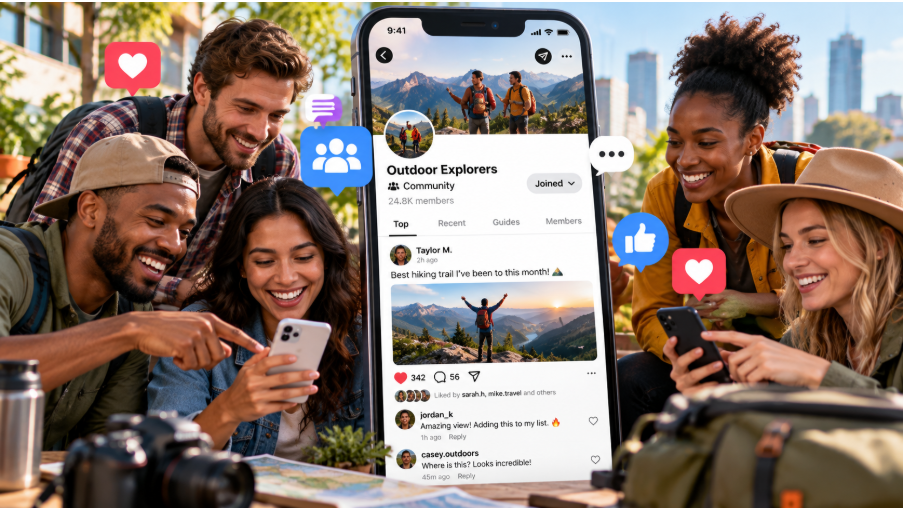

If you are struggling to convince your customers to convert, one way to address the problem is to add social proof for social media validation. This involves showing the prospects that other previous customers or reputable industry voices have tried the product and used it. When done correctly, it can help you convince customers who may be on the fence.
One form of social proof you can consider is case studies. You can use them to provide prospective customers with detailed reviews and stories that demonstrate how the product added value for its customers. In this article, we take you through the steps of using case studies as social proof.

Why Use Case Studies in Social Media Marketing?
Case Studies are a form of social proof in social media marketing that can have various benefits, such as:
- A tool for storytelling and lead generation. You can use case studies to share what your company does and connect more deeply with your target audience. This can be a good strategy for lead generation and building customer loyalty.
- Great endorsement from customers. As with online reviews, case studies can serve as customer endorsements. However, it's even better as the story is backed by data, enabling potential customers to view themselves from the customer’s perspective.
- Show credible data-backed evidence. While reviews and testimonials are great for social proof, they do not provide evidence. On the other hand, case studies can give complex, cold data. It can be a powerful way to leverage social media signals to build trust in your website.
- Improved SEO. When you share informative and engaging case studies, they can improve your SEO by holding customers' attention and signalling to search engines that you create high-quality content.
- Lead conversion. If you are just listing your product's features on your social shop or e-commerce store, it can be hard to convince customers to buy. Case studies, on the other hand, persuade prospective customers to take action and buy your product or service.
- Humanize your brand. Every great case study is backed by a story, a challenge, a solution, and success. This involves people who can read and relate to the story. By adding a narrative to your case studies, you can help your audience connect emotionally and view your brand as approachable and relatable. Adding a human touch can help you build a lasting connection with your target audience.
How to Turn a Detailed Case Study into Outstanding Social Media Content
If you are using case studies for your social media marketing, follow these steps:
Choose the Right Platform
Remember that different social media platforms have their own strengths, so ensure your case studies are tailored to each platform's content needs. Here are a few ways to use case studies in various platforms:
LinkedIn is usually a good platform for a B2B content marketing strategy focused on lead generation. However, in this kind of marketing, your site visitors aren't likely to convert on their first visits. That's why it can help to add case studies and social proof to compel them to make a decision. The most important thing on the platform is to remain persuasive, relevant, and visible during the different stages of the buyer’s journey.
Facebook and Instagram
As the top platforms for visual content, Facebook and Instagram are ideal for adding carousel posts with slides to share your story. You can also use reels to summarize the case studies. With their large audiences, these platforms are great for reaching a big audience and driving engagement through shares, comments, and likes.
TikTok
As the home of short-form videos, TikTok requires creativity in sharing your case studies. It is a great place for adding social proof, as short-form videos are the future of lead generation. Luckily, you can break them down into small, bite-sized formats. You can then add visuals, on-screen texts, and captions to highlight the main challenge, the approach, and the result. Doing so will help you grab your viewers' attention, especially when you understand the art of short-form video storytelling.
Turn it Into Bite-Sized Content.
In most cases, case studies are lengthy. This isn't the best format for social media, as it focuses on quick, easily digestible content. Therefore, a good idea would be to turn your case studies into different formats, such as:
- Video content. You can create a short, engaging video to bring the story to life.
- Key figures and stats. You can use eye-catching and straightforward designs to illustrate the impressive numbers.
- Before & after story. Illustrate the challenge, the solution, and the success using a carousel format.
- Client testimonials. Use strong visuals to showcase a happy customer's quote.

Add Strong Visuals
If you add your case studies in the form of long walls of text, nobody will engage with them. This is why visuals should be part of your marketing strategy. Therefore, use captivating, branded graphics accompanied by bold numbers to highlight key statistics.
You can include images to show before-and-after changes and showcase the impact of your business. You can even turn the visuals into graphics. If you have a visually compelling post, you are more likely to capture your audience’s attention.
Use Storytelling
Another great idea is to use storytelling for your case studies. This will help your audience connect more with the story than with a report. Make sure your story is structured in the form of:
- A challenge. Should illustrate the client’s struggle.
- The process. How your expertise made a difference.
- The results. The impact on the customers.
Use real clients and real numbers, and get the client's permission before you publish. If the results were better than what most customers can expect, say what typical results look like, because the FTC treats exceptional results presented as typical as misleading.
Make sure your storytelling remains simple, relatable, and compelling so your target audience sees a reflection of themselves in the story. It can also help them better understand how your product will benefit them.
Add a Call to Action
Once you have shown what the customer achieved, add a CTA that guides them to the next step. Your CTA can include phrases such as "need similar results," "click on the link," or "visit our site for more." You can also prompt them to send a DM. When well placed, a CTA increases the likelihood that a customer will convert.
In Conclusion
Case studies are a form of long-form content that persuades customers to buy a product or service. They are a good form of social proof that demonstrates precise results and persuades leads to take action. If you are wondering how to use case studies in social media marketing, our detailed guide will prove helpful.