

When it comes to leveraging brand voice to build users’ level of trust, one of the most forgotten tools is employee advocacy, even though it can help to strengthen the boring corporate voice with an authentic voice that is human-led. By having your team members share organic content on platforms such as LinkedIn, you can increase engagement by 8 times and generate 561% more organic reach.
The genuine stories and daily experiences shared by employees can have more weight than other marketing materials. In this article, we guide you on how to use employee advocacy to strengthen your brand voice and overall branding.

What Employee Advocacy Means
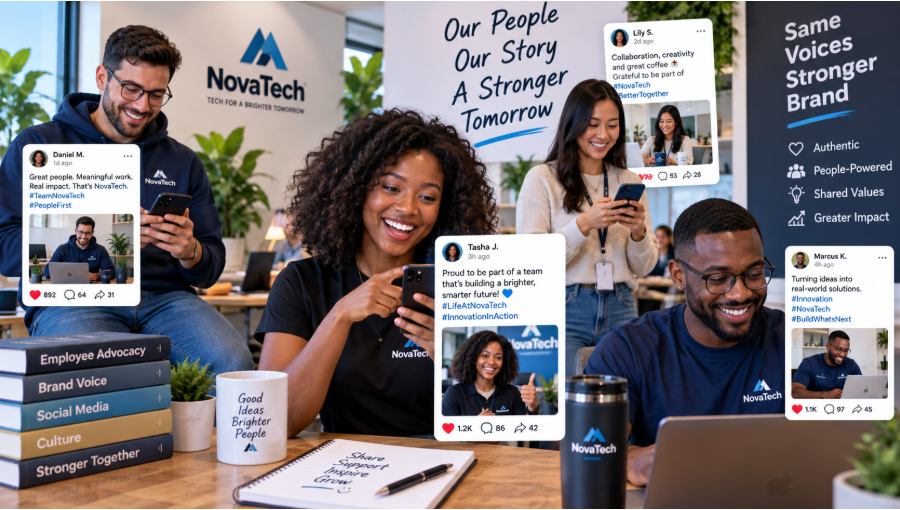
Employee advocacy involves the use of employees to share a brand’s content and messaging on their social media pages, thereby generating exposure for the company and the brand. The employees, therefore, turn into brand ambassadors who leverage their personal networks to promote the company and its values on social media.
It can involve sharing the business environment, employee experience with your brand, and the work environment. They can also show the company in a positive light to external players. By representing the company positively to industry players, its culture, and work environment, it can increase the level of trust and enhance the company’s reputation.
How Employee Advocacy Strengthens Branding
Employee advocacy can help boost your brand visibility in several ways, such as:
Higher Level of Brand Awareness and Trust
According to one report, employee posts receive engagement that is 8 times higher than that of brands. Additionally, the reach of posts shared by employees is usually 561% higher than that of brand posts. This can be attributed to the fact that:
- People are considered to be more credible.
- The social media algorithm favors accounts with personal content over company.
Higher Level of Authenticity and Trust
Social media users trust the recommendations of other people compared to brands, as it looks more like a peer recommendation than a brand. Similarly, when an employee shares content, it results in a cognitive bias. The business message delivered by employees is considered to be more credible, and there are higher chances of the prospect buying.
More Website Traffic and Sales Leads
Employee advocacy plays an important role in social selling, becoming an important step in the B2B sales funnel for the potential client and resulting in more leads, generating more saves on Instagram and driving more web traffic. The recommendation of employees on social media acts as the hook that turns readers into clients.
More Targeted Leads
When you get leads from your employees, they can be of the best quality. This often results in more relevant messaging from people in the same industry.
Improved Employer Branding
Employee advocacy often results in positive brand awareness, which can turn into an improvement for HR professionals and draw the best talent, who now start to see your company as the right place to work. Additionally, the social media network often has top candidates, as they are also likely to have contacts in the sector. That means if there are some new job openings, interested and qualified candidates are more likely to be reached.
Less Spending on Paid Media
When you rely on employee advocacy, you can reduce your spending on paid advertising. You can start to use employees as your top communication channels, reducing your paid budget through organic shares.
How to Create an Employee Advocacy Culture
When done well, employee advocacy can help to enhance your business image, increasing its reach and driving brand awareness. However, to effectively do that, you will need to foster a culture of employee advocacy.
You can do that in different ways, such as:
Fix the Company Culture
A common mistake that brands make is assuming employee advocacy begins with a toolkit. This should not be the case, as it should begin with building the trust of employees. Before you ask your employees to participate in your program on employee advocacy, you need to be sure they are:
- Proud of their work.
- Understand how they can help make a difference.
- Have a good relationship with their managers.
- Believe your brand stands for its values.
When this happens, they will have no problem sharing information about your brand with others without coercion. This also ensures that you have a powerful, authentic, and believable program on employee advocacy, which doesn't feel scripted. Therefore, if you feel like your program on employee advocacy isn't working, you should avoid focusing on the campaign and instead focus on auditing the culture.
Tips to Fix Your Company Culture
To build a strong work culture, use the following tips:
- Start small before going deeper. Start with the teams and departments already having a strong work culture. Since these are the departments where people already feel the business, they can easily impact other departments.
- Improve employee experience. An authentic program on employee advocacy needs to be authentic rather than forced. Unless your employees are happy, the program will feel inauthentic. Therefore, if you want a strong program, make sure you handle the employees' concerns.
- Create content that is shareable rather than corporate. Instead of providing the employees with polished content about your brand, provide them with the kind of content they need, such as personal wins, exciting projects, and behind-the-scenes content.
- Track the metrics that really matter. Don't just focus on the clicks. Instead, focus on the sentiment, tone, and the “why” behind the sharing. This is where you will get real insight.
- Enable instead of orchestrating. To ensure authenticity, focus on providing employees with the right resources rather than the rules they should follow.
Share Engaging Content
Make sure you are creating content that enables your employees to enhance their image as experts in the industry, and that you are using gamification to improve enjoyment by using surprise gift cards and gamification. An example of a brand that does that well is Reebok. The brand encourages its employees to share their image while donning the Reebok gear under the #FitAssCompany hashtag.
The campaign allows the brand to create a community around the shared culture of fitness while showcasing how they are connected to the brand. By using the hashtag early, it has become easier to track the content and distinguish it, ensuring a more consistent theme.
Provide Participation Incentives
When employees participate in the advocacy program, make sure you reward them with incentives and perks. According to one study, when employees are provided with monetary rewards and recognition, this works as a powerful motivation. Therefore, go ahead and put in place programs, such as a referral bonus and the employee of the month award.
However, avoid a situation where employees now create an ad for the company with the hope of gaining a reward. Instead, remind them of the need to remain authentic by adding their personal touch to the posts to improve engagement. For instance, IBM runs an employee recognition program that acknowledges employees for their efforts in advocacy.
Offer Training
Remember that some of your best advocates may not be experts on social media, and therefore, providing them with training can ensure that each person is comfortable in the advocacy program. For instance, Microsoft has a comprehensive training program for its employee advocacy program, where it teaches its employees the necessary social media skills. This ensures that they have a more impactful and cohesive program.
However, you should remember that employee training isn't a one-time affair but an ongoing effort. Therefore, you need to ensure that the sessions are relevant and fresh, especially with the ever-changing social media algorithms.
Set the Right KPIs and Goals
Determine what you want to achieve with the advocacy program and track its success. Understand the industry benchmarks to guide you so that you can tailor the program to the industry standards. Keep tracking and tweaking based on the insights you are getting every day.
For instance, the employee advocacy program by Dell starts by defining the objectives such as brand awareness, engagement, and lead generation. This enables the brand to measure the success of the program and change its stages using quantifiable data, ensuring they are continuously improving.
Provide Shareable Content
To drive a higher impact, make sure the content you offer employees for employee advocacy is shareable. You can do that by regularly providing them with some interesting content, such as employee features, press releases, company announcements, and other interesting content.
For instance, Cisco has a program that encourages its employees to share their expertise and insights for their employee-generated content. It can include blogs, articles, and thought leadership content. This enhances the reach and also helps to position the brand as experts in the industry, thereby building credibility and trust.
One rule keeps employee advocacy honest: when employees post about your products, they should make it clear that they work for you, for example with a short note like “I work here” or a company hashtag such as #employee. That is what the FTC expects, and it protects both them and the brand.
In Conclusion
Employee advocacy has emerged as a powerful tool that can help brands connect with the target audience while strengthening their brand voice. If you want to get started with employee advocacy, our detailed guide will provide helpful information


