

With increasing competition in influencer marketing, many brands are now investing in employee advocacy to expand their social media presence. However, creating a successful employee advocacy program involves more than just posting generic social media updates.
It also requires empowering your employees to enable them to create outstanding posts that foster genuine connections and amplify the brand's voice. In this guide, we take you through the steps of using employee advocacy to humanize your brand.
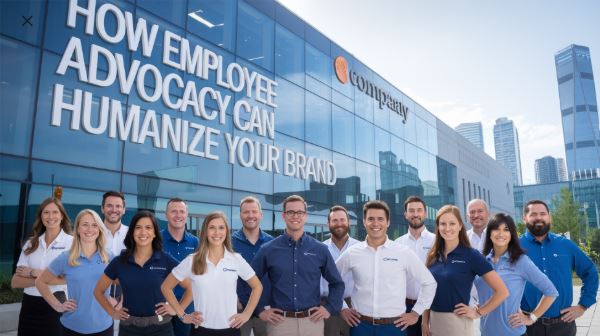
Tips for Creating an Outstanding Employee Advocacy Program
To enable you to show the human side of your brand, use the following tips:
Get Approval From Your Management
An outstanding employee advocacy program should begin at the top. If the top leadership and executive teams are active and have outstanding LinkedIn profiles, this may encourage your teams to participate as well. With leaders advocating for brands on industry trends, company culture, and even personal careers, this will set a tone for your organization. It is a sign that this not only encourages social engagement but also makes it a priority.
You can encourage senior management support by:
- Training executives on social media posting.
- Encouraging more regular posting, commenting on employees' posts, and participating in various discussions.
- Spotlighting thought leadership posts in different organization-wide initiatives like company meetings, internal shoutouts, and advocacy newsletters.
By setting an example, employees easily follow and feel more comfortable doing so.
Start Small and Keep Scaling
A common mistake brands make in employee advocacy programs is onboarding too many employees at once. A good idea would be to begin with a small group of enthusiastic advocates and keep expanding. Before you scale to hundreds of employees, start with a small team and keep learning. You can then refine the strategy and identify best practices before building momentum and rolling it out nationwide.
Here are tips on doing so:
- Find some engaged employees who are already active on the social media platform. If they are on TikTok, they could be creating short-form videos for lead generation.
- Offer support and training to enable them to share content with confidence.
- Track results and keep refining your method. You should keep learning to see what is working.
Enhance the Accessibility of the Employee Advocacy Program
Each advocacy program comes with some benefits and challenges. When engagement drops, you need to find a way to re-ignite it. One of the challenges you are likely to face is a low participation rate, driven by employees who feel that sharing contempt is hard work. You will need to address these challenges by integrating advocacy into your onboarding program. You can educate employees on the benefits of the advocacy program and make it part of the onboarding process.
The other challenge should be to keep employees engaged in the long term. To ensure long-term participation, the advocacy should feel natural rather than forced. You can achieve that by making advocacy a part of your company’s culture. You can also use friendly competition to recognize top contributors and add social sharing to the marketing campaign. When you have an engaging advocacy program, you can turn it into part of your culture rather than an extra task.

Encourage Content Personalization
If your employee advocates only copy and paste content from the organization template, they may end up with so many similar posts that look like spam. This is why it's a good idea to create personalized content that feels more authentic and resonates better with the target audience.
To enable employees to personalize content better, you can ask yourself several questions, such as:
- What is the meaning of these topics to me?
- How will this topic add value to my network?
- How do I add my personal perspective?
The goal should be to encourage employees to add their personal voices, participate in conversations, and do more than share those company updates. Your long-term goal is to build a personal brand that reflects your unique perspectives, keeping you more invested and engaged in advocacy.
Keep Diversifying Content
Some content formats will perform better than others in employee advocacy. Some of the types of content that drive high engagement include:
- Video content. LinkedIn has a video feed where short and authentic videos are performing well. Your employee advocates can use this feature to share clips recorded by employees that feature career reflections and industry insights.
- Behind-the-scenes content and photos. You can have your employees share team achievements, office culture, and event moments. You can drive quite a lot of engagement with just a straightforward group photo.
- Big wins and company news. You can also have your employees share company awards, press features, and other accolades. These are great posts for driving employee engagement and their networks.
Having a mix of content types allows employees to select one that meets their audience’s needs and personal brand.
Offer Continuous Support and Training
Employee advocacy shouldn't be something you set and forget. You must continue offering ongoing training to ensure your employees remain confident in the content they share. When offering employee training, you can follow the following best practices:
- Host quick training sessions to share best practices.
- Post some prompts and a template to spark inspiration.
- Share some success stories that highlight employees who excel.
- Run giveaways and competitions with recognition and rewards. If employees get rewards for posting, ask them to mention that they work for the company in those posts, as the FTC expects.
When your employees feel you are providing them with the necessary support, their participation will increase.
Foster a Celebration and Recognition Culture
It is essential to make employee advocacy feel rewarding and not an obligation. When employees are recognized and celebrated, those actively taking part will ensure momentum. You can do that in various ways, such as:
- Give shout-outs during your company’s meetings to highlight the best-performing employees in the advocacy program.
- Create friendly competitions with small incentives for employees who generate the highest engagement.
- Share some content generated by employees in the business newsletter. You can also showcase the top posts to validate the employee's effort and inspire others.
Result Tracking and Optimization
As with the other marketing strategies, you need to check your campaign's performance to ensure it's data-driven. When you track performance, you can easily determine what is working and what areas to improve. You need to track different metrics like:
- Click-through rates. People’s engagement rate using shared content.
- Engagement rates, such as comments, likes, and shares.
- Followers growth and how it impacts employees and company profiles.
- Lead generation. A good one for tracking conversations from the advocate’s post.
Once you have this kind of data, it will show the value of the advocacy. It can also help redefine your strategy.
In Conclusion
Employee advocacy is a good strategy for showing the human side of your brand and increasing trust. It is also a good strategy for expanding the reach of your posts by tapping into your employees' audience. However, like many other things in life, success doesn't happen overnight. It requires your leadership buy-in, a strong content strategy, continuous support, and a culture that ensures authentic engagement.


