

Customer retention isn’t just a metric anymore—it’s the signpost for sustained growth. With acquisitions costing an arm and a leg by 2025 and loyalty being an elite currency, how brands engage post-sale separates winners from strugglers! That is where integration with CRM is necessary—not as an administrative system but as a strategic force that powers personalized, timely, and appropriate engagement.
Customer Relationship Management software has evolved. The era of isolated software silos is over, and contemporary CRMs are part of the platform, syncing with sales, marketing, customer service, and even product development processes.
A well-integrated CRM when properly done, is your company’s memory: it remembers what customers bought, how they engaged, what they needed help with, and how they responded to previous contact. That’s where the magic begins because retention isn’t about random check-ins, it’s about making journeys personal and relevant at each step.
Here, we’re going to discuss how the integration of CRM is transforming customer retention in 2025! In this article, you’re going to get more information on AI-based personalization and real-time support synchronizations that turn one-off customers into brand loyalists, and inactive users into repeat fans!

The History and Development of CRM – From Data Storage to Dynamic Relationship Management
Not that long ago, many CRM systems were little more than electronic file cabinets—stores for customer contact data, lead status, and sales notes.
Fast forward to 2025, and they’re completely different with real-time engagement hubs powered by automation, behavior analytics, and AI. What changed isn’t just technology, but also the way of thinking. CRM is no longer just a sales tool but an ecosystem for business development.
New CRMs like Salesforce, HubSpot, and Zoho offer seamless integration with social media, customer support software, e-commerce websites, and even activity at the store level.
Your CRM no longer sits idly by collecting data. Instead, it grabs information from every online interaction your customer ever makes with your business. From a chatbot inquiry to a post on your Facebook page to a question regarding returning an item, it’s all synched into one profile, and that profile doesn’t stay static. AI analyzes behavior trends, forecasts communication timing, suggests appropriate offers, and models churn risk—in real time.
When your CRM is your business’ brain, customer retention is proactive and no longer reactive. You don’t say, “Why did they leave?” Instead, you say, “How are we going to get them to stay?”
Why Integration is the Missing Piece for Most Retention Strategies
Regardless of having the best CRM software with the right intentions, most companies don’t succeed because they treat it like it’s a product, rather than a workflow.
Customer retention is not the sales department’s nor customer service department’s province—it takes all hands. Without integration, there’s different data and mixed messaging, and customers slip between the cracks!
Imagine a customer who reaches out to you via chat with an issue with their order, only to receive a marketing email the next day for the exact same product they had an issue with. That discrepancy kills trust. But if your help desk, email marketing tool, and sales history are connected with your CRM, that customer would receive a follow-up email to determine if the issue was solved, as well as a promo code as a goodwill gesture. The outcome? Retention.
CRM integration puts everyone on the same page in every department. It aligns message, timing, and tone at each touch point. With customers demanding hyper-relevance and instant response by 2025, anything less than seamless integration is an invitation to churn. Businesses that invest in smart CRM architecture today are building strong customer relationships for tomorrow.
Mass Personalization – How AI-Powered CRMs are Redefining the Game
Basic “Hello First Name” emails won’t be enough anymore. Personalization in 2025 is all about offering the right product from browsing history, anticipating reorder dates, tuning frequency by engagement, and even personalizing customer support responses by mood and tone. This level of personalization isn’t something you’re going to be able to achieve manually—it requires AI-driven CRM systems that quietly do the heavy lifting.
AI-enabled CRMs can read millions of data points across touchpoints to offer up personalized moments. When your customer has a shopping habit on Friday night, your CRM knows that the moment has arrived again to offer something special to them.
When they go quiet over email but devour Instagram, the CRM encourages your social team to initiate a DM conversation. This isn’t surveillance—this is intelligent, empathetic marketing with the advantage of context and intent.
What’s strongest is that AI personalization doesn’t merely sell but retains. When you get to know the customers and they feel that they’re understood, they’re much more likely to come back.
They’re not merely impressed with the product; they’re impressed with the way that your brand is making them feel. Amid a sea of automation, a brand that personalizes wins every time.
Power of Real-Time Data Synchronization Across Touch Points
Timing is everything when it comes to customer experience. Whether you are responding to a support question or expressing gratitude with a thank-you message after a transaction, the impact is always stronger when the timing appears to be absolutely right. That is where having real-time data integrated with your CRM becomes a retention superpower.
Integrations now bring your e-commerce site data, help desks, chatbot, social, and even your POS systems into one real-time updated customer view. If a person leaves their cart, your sales rep is alerted by text to contact them. If someone tweets that they are experiencing a delivery issue, your support team is alerted within the CRM to respond in context.
Every interaction is tracked, responded, and resolved without repetitive effort and loss of context. This synchronicity eliminates the customer’s biggest source of frustration: having to repeat themselves.
When your brand “remembers” their experience, you build loyalty and trust. Real-time syncing turns reaction-based service into proactive care. And by 2025, when customer patience is lower than ever, being fast isn’t nice—it’s necessary.
Automating Customer Journeys Without Losing the Human Touch
Automation sounds like a robot, but with smart CRM in place it's just human flow. Automation in 2025 is not about replacing that human touch, it's about expanding it by making sure you are sending the right message at the right time and allowing you to focus on the value from high-touch relationships.
With native CRM workflows you can easily create automated triggers in response to customer behavior—a welcome message when they first sign up, a special offer before their subscription comes to an end, or even a win-back email after a period of no engagement.
The magic is in what it takes to create those automated touchpoints. They are built on data generated by your CRM’s AI engine but are tailored well enough that they come across as natural, empathetic, and pertinent. Rather than a bland “thank you,” imagine a message highlighting a recent purchase, some product advice, or an offer to interact with customer support.
The automation is imperceptible, yet the sentiment is so human. It’s this blend of efficiency and care that causes customers to feel looked after, not sold to, and that eventually builds long-lasting loyalty.
Merging CRM with Social Media to Achieve Total Customer Insight
Social networking is now a valuable source of consumer sentiment, comments, and engagement in addition to a marketing outlet.
Incorporating your CRM with social channels like Instagram, TikTok, Twitter, and Facebook in 2025 offers you a 360-degree consumer perspective beyond purchases. Tracking social activity—comments, likes, shares, DMs, and mentions—gives you a picture in great context.
For instance, if your client is very active on your product postings but has never converted, your sales team could modify their outreach strategy to reinforce that relationship. Your customer service staff is instantly notified to intervene before the issue becomes worse when your customer speaks out negatively on social media. This alignment lets companies connect with consumers as whole people and dismantle separated communications.
Additionally, it opens fresh opportunities for exact marketing efforts, influencer collaborations, and community-building projects employing live social data. Last but not least, combining social intelligence with CRM maximizes retention by transforming every customer interaction into a smart and reactive one.
Using Analytics with CRM to Project and Avoid Churn
One of the most significant benefits of integrating CRM is the potential for moving from reacting to anticipating customer retention. Analytical tools, fueled by CRM data, are capable of recognizing warning signs that the customer is heading out the door, and present actionable information to prevent it.
By 2025, AI algorithms in CRM systems can detect signs of declining engagement, declining purchase rate, or even patterned negative feedback. Such patterns enable your retention teams to intervene before things are too late. For example, if your VIP customer has not interacted with your brand for weeks, the CRM may trigger an outreach with personalized incentives or support.
Predictive churning saves you money, but earns customer respect too. It shows that you have your ear close enough to recognize when something’s going wrong. When you combine that with native communication abilities—email, text message, social—you’re able to fuel timely and thoughtful multi-channel campaigns, rather than spammy and desperate ones.
Choosing the Right CRM Integration Partners and Platforms
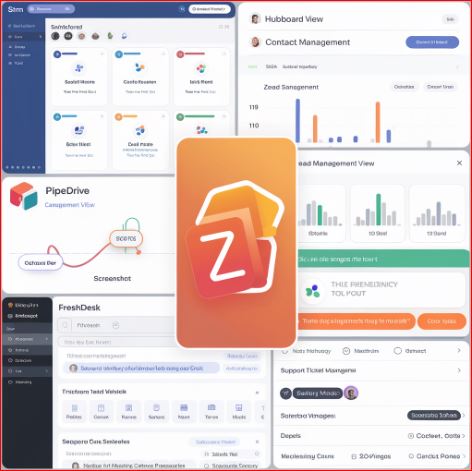
Choosing the right CRM tools and integration platforms becomes challenging as more ones surface. Finding chances that satisfy your business goals, technical infrastructure, and customer experience plan comes first in 2025.
Begin by figuring out how effectively a CRM will match your current sales, marketing, support, and e-commerce apps. A broken application divides silo and reduces retention attempts. Look for tools with powerful automation capabilities, open APIs, and out-of-the-box connectors.
User experience should not be neglected either. With your customer retention strategy, your CRM should be intuitive and flexible enough that your team can develop along with it by combining deep analysis with smooth integration and simple dashboards meant for creators and small enterprises.
Ultimately, pick suppliers that give strong customer care, frequent updates, and unambiguous data privacy rules. Transparency and security are vital to build trust not only with your audience but also with regulators, as consumer data grows even more sensitive.
Enhancing Customer Service through Holistic CRM Solutions
Long-term customer service is always the cornerstone of loyalty, but by 2025, it’s brought to a whole new level with the integration of CRM. When your service reps have instant access to the customer’s total history—orders, past interactions, likes, dislikes, complaints—support can be personalized and fast, not transactional.
Great CRMs enable support reps to view real-time order status, and also previous tickets, on top of being able to pull sentiment data from chat tone or message content. This allows reps to anticipate needs and offer proactive instead of reactive fixes.
To give you an example, if a recall affects a customer’s new purchase, your support team can reach out proactively with instructions and compensation before the customer gets frustrated.
Besides, automated processes route high-priority problems to seasoned agents and trigger follow-up reminders so that no customer is unheard. Such impeccable support leads to satisfaction and turns one good experience into a lifetime relationship.
Enhancing Retention with Loyalty Programs Driven by CRM Data
Loyalty programs have evolved to more than just the mere points accrual—now, they rely heavily on CRM data if they are going to be optimally effective and engaging.
By 2025, the integrated CRMs allow brands to tailor reward offers to individual behavior and tastes such that the program no longer feels like generic inducement but individualized appreciation.
For example, your CRM could identify repeat customers who always purchase the same sort of product and offer them exclusive first look or package promotions that are relevant to them. It could even notice lulls between activity and trigger re-engagement campaigns with reward incentives.
You have real-time loyalty status and reward tracking by channel, whether consumers shop online, across physical stores, or even through social commerce. Such data-driven, consistent engagement stimulates repeat buys even as it inspires passion, turning occasional buyers into passionate advocates.
Scaling Retention Efforts with Collaborative CRM Workflows
Retention is a collaborative effort. By 2025, there will be integrated CRM platforms that enable the marketing, sales, support, and product teams to work together, breaking silos that once hindered integrated customer experiences. When all are using the same customer data, retention efforts are more coordinated and effective.
For example, marketing is able to leverage CRM analytics to create targeted campaigns aligned with the support’s understanding of shared issues, and sales organizations are able to create personalized renewal conversations aligned with customer usage trends. Meanwhile, product organizations gain visibility into trends among customer feedback, enabling them to plan improvements that are most important to loyal customers.
CRM integrations provide more efficiency with simplified workflows. Teams are able to route tasks, see the communication history, and track retention metrics all in a single location. This alignment provides consistent messaging and service to customers, and increases overall satisfaction and customer retention.
Measuring Success – Key Metrics to Track with Integrated CRM Systems
For retaining customers, it is necessary to be tracking what matters most, and advanced CRM solutions have never made it easier or more precise.
The days of relying on customer frequency or repeat purchase rate are long gone. In 2025, businesses need to drill down into advanced measures that indicate the customer relationship health in real time.
You’re able to track Customer Lifetime Value (CLV) at the individual-customer level, seeing how retention efforts drive revenue over time. Engagement measures such as contact-response rate, frequency by communication channel, and support case sentiment score offer a more detailed picture of customer satisfaction.
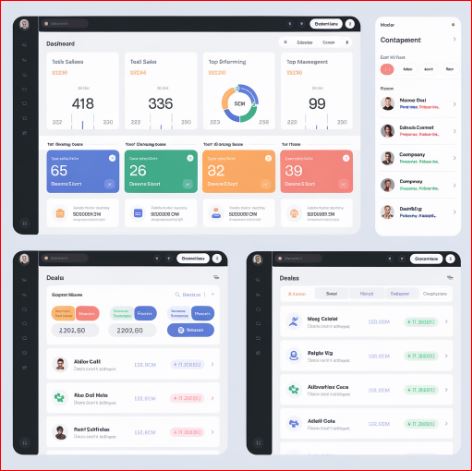
The allure of having a single CRM is having the ability to build personalized dashboards that mirror your business goals. So, if you have a penchant for churn reduction, for example, your dashboard would include at-risk customers as AI-driven prediction models and would track the success of targeted retention efforts. The organizations for sales and support, meanwhile, can monitor their time to resolution or upsell conversion rates, correlating those scores with retention performance overall.
By monitoring such key success metrics regularly within one platform, businesses are able to move through retention efforts at a quicker pace, allocate resources more effectively, and have each interaction contribute directly toward long-term loyalty.
Future-Proofing Your Customer Retention Strategy with CRM Innovation
Going forward, CRM integration will also be progressing at a frenetic rate, transforming how brands engage with their clientele. In 2025 and years to come, the future of retention is in the adoption of future technologies, such as sophisticated AI, augmented reality (AR), and blockchain for secure and transparent data management.
AI shall evolve where hyper-personalization isn’t merely preference-based but is dependent upon the customer’s current emotive state, maybe through facial recognition during video communications or tone during a phone call.
CRMs with integrations through AR may enable customers to bring the product into their environment before buying, enabling interactive, personalized experiences that engender confidence and expectation.
At the same time, privacy and use of data responsibly will be foremost in consumers’ minds. They look for brands that not only protect their data but also use it responsibly to enrich, not manipulate, their experience. The future of CRM software will be to balance personalization with transparency, offering choice as well as deep engagement to customers.
For businesses, the key to future-proofing retention is staying agile—adopting tools that easily adapt with new technology quickly, maturing with data insights over time, and staying customer-centric.
CRM integration investment now is not just solving immediate issues; it’s laying the solid groundwork that adapts and thrives with evolving customer expectations.
Conclusion – Building Enduring Affiliation with Smarter CRM
Customer loyalty in 2025 requires more than great products or campaigns—it requires deeply engaging, one-to-one, and in-time experiences that touch customers at every point and make them feel valued!
Integration with CRM has emerged as the foundation for this new approach, transforming isolated information into actionable intelligence and distilling unconnected touchpoints into a unified journey.
From AI-driven personalization and real-time sync to natively integrated support and collaborative workflows, CRM systems today allow companies to foresee needs, avert churn, and establish long-term emotional connections. But success is more than technology—it’s about how purposefully companies integrate these tools into the fabric of their culture and strategy.
Through the right choice of CRM platforms, measuring what truly matters, and experimenting with an ethical framework, businesses have the potential to turn the art of retention into their greatest single source of competitive advantage.
The companies that will thrive in 2025 are the brands that retain customers, but more importantly, make customers feel at home! It’s time to take your retention strategy to the next level. Intelligent CRM integration is no longer a choice. It’s now imperative!


