

When creating a lead generation content marketing strategy, ensure it meets your target audience's needs and answers their search queries. On top of that, you need to ensure that your content is getting ranked by the search engines. Otherwise, if the search engine doesn’t see your content, it will not serve the intended purpose, no matter how good it is.
One way to get your content noticed is through content optimization. In this article, we will take you through the steps you need to optimize content to meet your long-term social media growth strategy.

What is Content Optimization?
Content optimization involves optimizing your content to ensure it achieves its goals, such as ranking highly on the search engines or converting customers. Remember that the reason you create content is to provide users with what they are searching for and to increase its visibility by ranking in search results.
However, after creating the content, it might become outdated after a few months, or the keyword intent or the search engine ranking weight might change. If you want to maintain your ranking on the search engines, you need to be proactive. Optimizing your content can keep it fresh and discoverable on the SERPs.
Since search engines reward unique, up-to-date information by assessing its freshness, comprehensiveness, uniqueness, and timeliness, content optimization will help improve your content's ranking. Updating your content will help you increase your reputation with the target audience. People will start quoting your content, resulting in more backlinks to your website, which can result in higher content conversion in the long run.
Tips For Optimizing Content For Maximum Visibility
To ensure that your content receives maximum visibility, use the following tips:
Use the EEAT Principle
Today, Google rewards content that uses the EEAT principle: Expertise, Experience, Authority, and Trustworthiness. If your content meets these goals, it will work better than content that consists of mixed-up ideas. Therefore, when creating content, focus on positioning yourself as an expert in your niche, addressing your audience’s pain points, and offering an original perspective.
Regularly Create Content
Google rewards fresh, original, and updated content with a higher ranking, and your readers love it, too. When you regularly update your content, you can improve user engagement, build your credibility, and position yourself as an industry expert. This can also help you extend the lifespan of your existing content as you continue to update it.
Ensure Accuracy
You also need to ensure that you update your content with factual, accurate information that users can trust as a source of high-quality information. You can build a fact-checking and refreshing strategy by setting reminders for content pieces that need to be updated. Use your best judgment to determine a sound methodology for reviewing the blog posts. This is important as topics such as AI and VR can change regularly.
Optimize for SEO
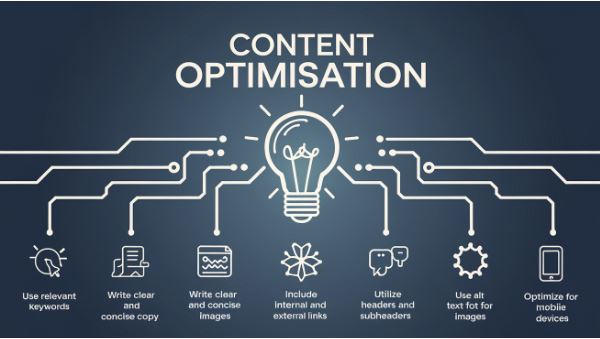
A key part of content optimization involves ensuring that your content is well optimized for SEO. Here are a few tips to ensure content is SEO-optimized:
Add Relevant Metadata and Keywords
After understanding the types of content people use, you also want to ensure your content appears in the SERPs. Start by conducting keyword research to identify related keywords for a topic. You should then add these organically in the titles, product descriptions, and blog posts.
Do not add too many keywords, as this can affect readability and cause the content to be penalized. Make sure you also break down the content using some short paragraphs and headings, then improve your SEO ranking by using image labels, title tags, and meta descriptions. Adding relevant keywords will help search engines understand what your page or blog is about and, therefore, recommend it to more users.
Improve Your Technical SEO
When crawling your site, search engines consider not only the content but also the site's readability. If they cannot read the site, this will affect your SEO ranking. Optimize for the site’s speed, mobile friendliness, site navigation or architecture, crawlability, and more.
Consider the Google Core Web Vitals that are indicators of your technical SEO. These include factors such as the load time, visual stability, or responsiveness. Use web analytics tools such as Google Search Console to assess your site's technical health and track other key metrics, including performance and site speed.
Internal Linking and Site Navigation
Internal links can help search engine bots better understand your content and how best it fits into your website ecosystem. Make sure your internal links are well contextualized to enable bots to find and rank the pages easily, while passing authority from one page to another. This can also help users to easily navigate from one to another, resulting in a higher dwell time.
Add Video Content
Interactive content is effective for boosting engagement. Studies indicate that video content often generates high dwell time, a key factor affecting SEO and conversion. Dwell time is the amount of time a user spends on a page. That means that when you add high-quality explainer videos to your content, you can significantly improve page performance.
If possible, also add closed captions to make the videos accessible to viewers who are watching without sound. The good thing with video transcripts is that, unlike audio, they also get indexed and can improve the ranking of your videos.
Improve Brand Affinity
The value that your content provides will affect its performance, so enhance your quality offering by adding something new. Provide expert insights even as you dig deeper into the competition. This technique will help you increase readers’ affinity for your brand and position your brand as the authority in your niche.
Conversion Optimization
Ensure that you have also optimized the content for the different stages of the buyer’s journey. For instance, you can use educational content to bring prospects into the sales funnel, while using product comparisons to drive sales.
During conversion optimization, consider the next step the consumer is likely to take and map the consumer for those stages. Speak in a language your audience can understand and position your CTA appropriately based on where readers are in the buying journey.
Encourage Social Sharing
Social sharing can help increase the reach of your content and is a good strategy for reaching a bigger and more diverse audience. This not only offers indirect SEO benefits, such as more backlinks and referrals, but also helps increase brand awareness. If users are sharing your content, you can reach new audiences and engage with the brand without paid ads.
In Conclusion
Content optimization involves refining your content to achieve its goals better. If you are not taking the time to optimize your content, you may be missing a lot. Therefore, we recommend you begin using the above content optimization steps to increase the visibility of your content. This will work well, especially when combined with data storytelling to captivate social media audiences.


