
One way to stay ahead of your competition is through competitor research, which provides you with a good understanding of their strengths and weaknesses. It will also provide insights into how your audience treats your competition.
A good competitor analysis strategy will help you understand your competitors and what they are doing. It will also enable you to monitor your trends and use data to refine your plan. This article will guide you through the power of social listening for competitor analysis.
Why Use Social Listening for Competitor Analysis
Social listening can provide essential insights into the competitor landscape that you can use to refine your marketing strategy and optimize the return on investment (ROI) and innovation across your business. Competitor analysis can also provide insights into macro-consumer trends, such as Gen Z's spending habits or brand preferences.
Additionally, social media is an ever-evolving field, with new platforms and features continually emerging. If you want your brand to stay relevant, you must ensure that research is on your radar. Through social listening, your team can gain fast and comprehensive insights from various social media platforms, customer forums, and review sites at an affordable cost.
When you leverage social listening, you can overcome algorithm changes and understand the regularly changing consumer behavior. You can better understand how the competitors are navigating the changes and evolving their strategies to meet these needs. Social listening enables you to analyze brand conversations, better understand consumer needs, and ensure that your market share remains competitive. This allows you to future-proof your brand in a saturated and competitive world.
Benefits of Social Listening in Competitor Analysis
If you are wondering if social listening has any benefits in competitor analysis, here are a few of them you need to know:
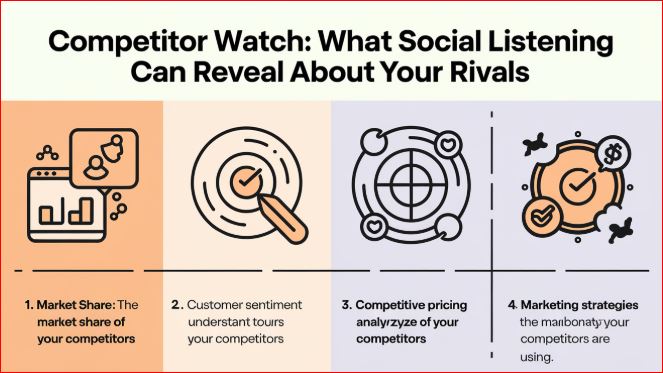
- Understand competitor sentiments. Since you are targeting the same customers as your competitors, their audience’s feedback will also benefit you. Social listening will provide these insights.
- Identify if there are market gaps. Social listening will provide valuable brand information you would not have easily gotten. This could include information on customers' pain points, unmet expectations, features they dislike in your competitors' products, and other relevant details.
- Better content strategy. When you understand the kind of content that resonates with your competitor’s audience, you can identify the formats, channels, or topics to focus on.
- Understand industry trends. Social listening can help you uncover industry trends, thereby enabling you to stay ahead of the competition.
How to Use Social Listening For Competitor Analysis
Competitor analysis is the process of understanding what your competitors are doing. Once you know what others are doing, it will be easier to take your brand to the next level. Competitor analysis can involve various steps, such as visiting your competitor’s website, tracking their social media ranking, or reviewing their social media pages and blogs.
Here are ways to use social listening to get insights into your competition’s strategy:
Identifying Competitors
Before you start researching your competition, you need to understand who your competitors are. These could be businesses in your niche that offer products or services similar to yours. Social listening will help you identify competitors you may not have been aware of previously. The share of voice indicates the frequency at which your competitors appear in conversations relevant to your brand.
When it comes to social media topics related to your brand, consider which businesses tend to emerge quickly, which are your competitors. However, even as you identify your competitors, ensure they are similar to yours. Otherwise, focusing on large companies with larger marketing budgets may not provide many options for optimizing your campaigns.
Optimize Their Campaigns
After understanding your competitors, you can begin to gain insights into their social media activities. Consider what they are doing to build a substantial following and the kind of posts they are creating to keep their audience engaged.
You can review the types of content that top companies are making to see what kind of content generates the highest engagement. This is important because social media users tend to react most to content that relates to their interests or brands. If your competitors are tracking these conversations while you aren't, they will stay ahead of you.

Check Competitor Content Engagement
When checking competitor engagement, also remember to review what people are saying about them. The competitor sentiment analysis will provide insights into people’s opinions about them and how their image differs from yours.
You can leverage the latest AI tools to compare the number of interactions and mentions your competitors are getting. Consider the ratio of positive to negative mentions to gain insights into the audience's perception of your competitors. Also, remember to check what social media users are saying about your brand in comparison to your competitors.
Consider an Influencer Marketing Strategy
Studies indicate that between 2019 and 2024, the influencer marketing industry more than tripled in size, making it one of the most popular marketing methods. Therefore, you will need to consider the influencer marketing strategy that your competitors are using. As noted earlier, examine the strategies of small businesses that are similar in size to yours.
However, also check big brands to see what you can learn from their influencer marketing strategy. For instance, you should determine whether your competitors are collaborating with micro-influencers or mega-influencers. What are the most popular styles used by your competitors in their influencer marketing posts, and do those styles increase engagement and reach?
Keep Improving
A common mistake that brands make when conducting competitor analysis is assuming that it is a one-time event. This isn't the case, and it should be an ongoing effort. Ensure that you regularly integrate data from social media engagement to understand both the strengths and weaknesses.
For instance, if you are analyzing influencer marketing campaigns, you can study other business trends. Otherwise, if these businesses are embracing the latest trends, you will struggle to convey a unique impression that enhances your brand image. With more experience in gathering social media data, you will see the impact of this data on your business’ success. Unlike any other social media strategy, effective social listening is a result of regular practice.
In Conclusion
Today, many brands are leveraging social listening to gain a competitive edge. Without social listening, competitor analysis can be limited. However, by following our guide above, you will get the most out of the social listening data. You can then use the data to continually improve your strategy and gain a deeper understanding of your top competitors.