
Any brand with a social media presence may have probably found itself in a situation where it was wondering how to respond to negative comments and posts reviewing its products. One thing you need to remember is that social media users are watching your responses.
If you respond negatively, the conversation can grow into a full-blown social media crisis. But if you respond positively, you get an opportunity to discuss with the customers how to serve them better. This is why you need to have a social media brand voice to build audience trust. When building one, you also need to understand the difference between brand voice and tone. Join us in this article as we provide more insights.
What is a Brand Voice?
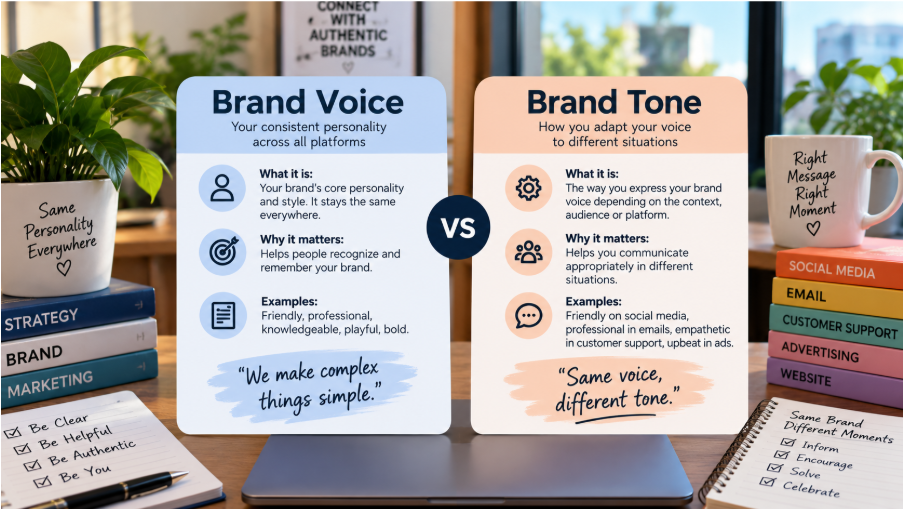
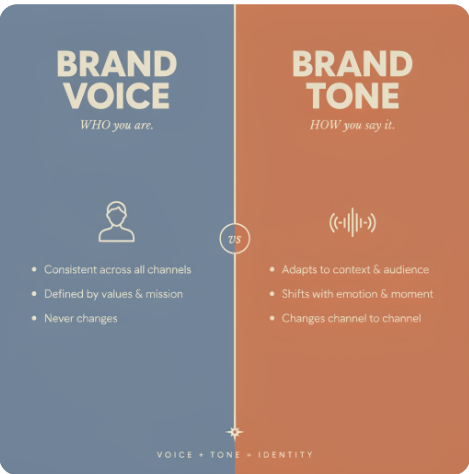
A brand voice refers to the unique personality that your brand uses in driving its conversation. It involves various elements such as the choice of words, sentence rhythm, and intellectual and emotional tone connected to overall communication. It is therefore a reflection of how your brand communicates to its audience, reflecting its core mission, values, and unique characteristics. However, a brand voice isn't only about how it speaks and writes; it's also about how it acts.
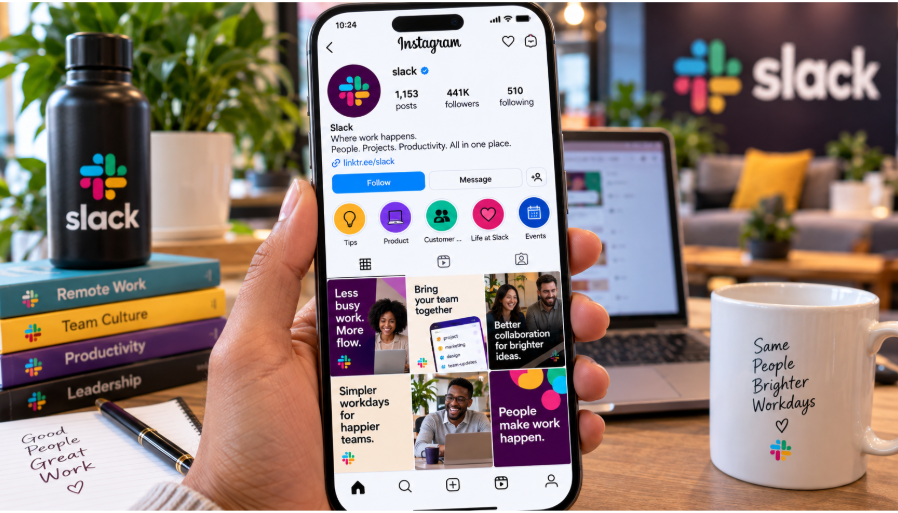
For instance, Slack uses a brand voice that is direct and recognizable, ensuring your communication is more pleasant and simpler so that audiences can feel like they are talking with other people. According to them, they are thoughtful and deliberate in the way they use language, encouraging users to have a deeper connection with the brand.
Why You Need a Brand Voice
A strong brand voice can be key in:
- Enhancing brand recognition. When you use the same words, phrases, and communication style, you can create a distinct pattern that audiences can, with time, identify. It becomes easier for your target audience to recognize your brand in the midst of the competition.
- Trust. According to one study, 81% of consumers suggest that trust is a major factor that they consider when making a buying decision. When you have a brand voice that sounds human and relatable, your brand can be seen as approachable, which increases the level of confidence and familiarity.
- Emotional connection. The audience doesn't just remember what you say, but how you say it. When you align your voice with the values of your audience, you can easily create an emotional connection that drives social shares.
Therefore, creating an outstanding brand voice can help you build a loyal audience on Instagram.
Examples of Brands with Distinct Brand Voice
Here are examples of brands that have built a distinct brand voice.
Nike: Motivational and Empowering
Nike has already created a distinct brand voice that is more motivational, just like their tagline “Just Do It”. The brand encourages people to push beyond their limits, using direct and inspirational language that resonates with their audiences in different communication channels.
On social media channels, the brand uses motivational and direct command lines such as “Believe in Something” and "Find Your Greatness”, two slogans that focus on overcoming challenges. Additionally, the popularity of their slogan, “Just Do It,” is a clear indication of the way a strong brand voice can be iconic while bringing the desired results.
Old Spice: Humorous and Absurd
An example of a brand that has seen success with a brand voice is Old Spice. By using creative and outstanding masculine humor, the brand was able to break the traditional industry rules. The brand uses ridiculous claims and theatrical delivery to break the barrier of complexity in the grooming industry, using short and highly shareable content. Their humor resonates with its audience because it illustrates how absurd the masculine stereotypes are while provoking men with a desire to be more attractive and confident.
By using humorous and bold statements, the brand has been able to capture younger generations while still appealing to its traditional customer base using authentic products.
Apple: Clean, Innovative, and Sophisticated
Another brand that has a distinctive brand voice is Apple, as it uses short and declarative phrases to show confidence without a lot of explanation. In line with the brand’s goal of ensuring complex technologies are more accessible, it uses simple phrases like “It just works" and “Think differently”.
For decades now, the brand has consistently maintained elegance in its website content, customer communication, and product launches. Instead of using technical descriptions of the product features, it focuses on the user benefits, allowing the product to speak for itself using clean messaging. Through its minimalistic voice, Apple has focused on its core voice of innovation and simplicity, while ensuring an emotional connection with its customers who focus on functionality and design.
What is Brand Tone?
Brand tone refers to the emotional inflection and attitude that your brand projects in its communication. It differs from the brand voice in that the tone is not static and varies depending on the audience, channel, and context. Therefore, when a brand changes its messaging to match the situation, what changes is the tone, not the voice.
In fact, the brand tone isn't meant to remain static. It should change depending on the relevance, empathy, and situation. For instance, how your brand sounds on a social media post doesn't have to be the same as in a blog post. Similarly, the use of a podcast ad should be different from a press release announcing an emergency response.
If you are creating a first-time sales pitch, you can use an upbeat tone. If you are onboarding new customers, you can use an encouraging and cheerful tone. You can also use a careful, precise, and brief pitch for an emergency response.
One of the challenges that brands face in providing tonal guidelines is that these are often driven by the context. However, when you outline and define the situation your brand faces, it can help with communication. Setting such a parameter can enable you to be more consistent.
Benefits of a Brand Tone
A good brand voice tone can help a brand to:
- Adapt to different contexts. When you adapt your tone, it becomes possible to communicate effectively in different situations, such as social media posts, customer service, and marketing campaigns.
- Ensure consistency. Even though the tone can change, it should always align with the brand voice, ensuring cohesiveness in your branding.
- Higher engagement. When you tailor the tone to connect with the different audience segments, you can easily meet their preferences and expectations.
Examples of Brands with Successful Tone
Here are examples of brands that can be said to be successful in their tone.
IKEA: Homely, Active, and Helpful
IKEA often uses a tone that creates the impression that it is simple, stress-free, and easy to buy from the brand. They do that by using various phrases such as streamline, your choice, and easy. The brand also reinforces this with active construction of verbs, using words such as we help, we will arrange, and we need you to. Additionally, the brand also uses a tone that enables customers to understand how their items will benefit them with words like:
- Get a refund when you return within 90 days.
- Order for free delivery.
The brand uses a subtle tone, focusing on small everyday issues.
Revolut: Young, Cool, and Conversational Tone
When you look at Revolut's conversational tone, one thing that stands out is that they want to project an image of an industry disruptor, even in their name. This is understandable considering that the brand offers digital banking services that aim to disrupt traditional banking, and they have already gained over 15 million customers since their introduction in 2015.
With their disruptive product, they understand why they use radical messaging different from that of the traditional banking sector. They use a lot of emojis in promotions, which also helps to set them apart from traditional banks. The brand also uses a conversational tone with words such as “Yeah, sorted, and C’mon”.
They use the same tone as you speak and sometimes seem to break the boundary in their language. However, this has enabled them to show their USP. By reading their copy, their unique way of doing things comes out, which is a mark of a good tone.
LIDL: Sarcastic, Cheeky, and Irreverent
For many years, LIDL has made a reputation for selling poor-quality products. They have, however, used their tone to create a different image. For instance, in their #LidlSurprises campaign, they encouraged their fans to share surprising good products they got from LIDL despite the low prices.
In addition to the USP of a low-priced product, they also show their USP by using a sarcastic, irrelevant, and cheeky tone of choice. The business voice also extends to their store, where they have dubbed the center aisle Middle Lidl and packed it with random items not found in most supermarkets.
Since tone works best when it highlights your USP, Lidl's unique tone, backed by the peculiar aisle, creates a sense of differentiation from competitors.
In Conclusion
If you want your communication to be more effective, you need to understand the difference between brand voice and tone of voice. The brand voice aims to ensure a more consistent style and personality, aligning with your mission and values, which helps you to connect with your target audience.
On the other hand, brand tone focuses on adaptability to enable your communication to resonate within different contexts. When you regularly evaluate and refine the brand tone and voice, you can ensure consistency and connection with the target audience, improving your brand identity.