

If you are searching for a good business communication channel, two of the most popular options are WhatsApp and Telegram. Each of these apps has its strengths and weaknesses. So, which one of these should you use effectively for your business while maintaining security and compliance? Join us as we answer these questions.
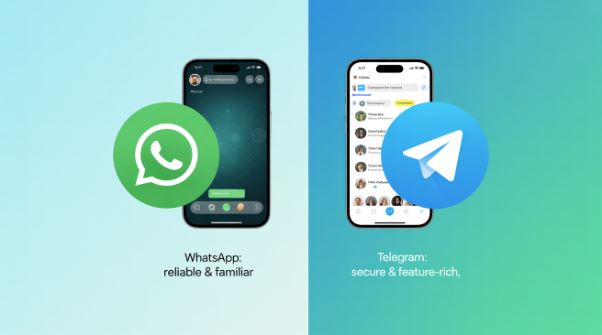
Factors to Consider When Choosing a Business Messaging App
If you are searching for a business messaging app, you will need to consider different factors such as:
- Communication features. Consider the features you need for your business communication, as the top messaging app should have different features such as file sharing, broadcasts, video and voice calls, and more. You may also need chatbots, admin controls, and automation.,
- Privacy and security. You need to ensure that you select a secure and compliant business tool that meets the necessary data protection and security standards, such as strong control over your data and encryption.
- Capability for compliance. The industries that are already regulated, such as healthcare, finance, or law, may require a messaging platform that has features such as audit trails and message retention to ensure there are no financial and legal consequences.
- Scalability and pricing. As your business grows, you want to know if the messaging app will be able to handle it. For instance, when using WhatsApp for marketing, consider whether to go with a personal or business channel.
- Integration and the ability to handle multiple devices. You need to select a business communication app that works seamlessly across different devices. This should integrate well with your business systems and ensure you have a more streamlined workflow.
WhatsApp vs. Telegram: Choosing the Right One for Your Business
Even though WhatsApp and Telegram are popular for messaging, they serve users differently. WhatsApp is one of the most popular messaging apps with over 3 billion users worldwide. This is because of its more seamless and secure messaging. It's, therefore, a preferred messaging app for people searching for a safe and seamless messaging option.
On the other hand, Telegram is a versatile and innovative platform with around 1 billion monthly users. It is popular because of the flexibility it offers, along with a broader range of scalability and customization options for users who need unique features and more control over their messaging.
Why WhatsApp and Telegram are Great for Business Communication
The good thing about these apps is that they come with a lot of features that help to streamline communication on both platforms, which can help you to unlock the power of social listening. However, both of them come with their strengths and weaknesses depending on the user’s needs.
Group Chat and Channels
WhatsApp allows members to create group chats with a maximum of 1024 members. In recent years, the platform added the Communities feature, which will enable users to create groups with a more structured hierarchy. Therefore, if you have a business that needs to manage different departments or teams, but under one admin, WhatsApp will enable you to do that.
On the other hand, Telegram has been created to host large groups with up to 200,000 members. It is also a great platform to enable businesses to make public or private channels for broadcasting their messages. If you want to communicate with thousands of people, such as a large customer base, Telegram will enable you to do that.
File Sharing and Limits
On WhatsApp, you can share files of up to 2GB, which are usually kept on the user’s device. This makes it an excellent choice for businesses that need to send large files, but without the proper storage and backups.
On the other hand, Telegram provides users with unlimited cloud storage. That means you don't have to worry about running out of space when sharing your files on Telegram. You can access the file on any device, but with a 2 GB limit for each file, which offers businesses more flexibility regarding document sharing.
Video and Voice Calls
Both WhatsApp and Telegram support video and voice calls, but they also have some differences. WhatsApp has a more robust video call, supporting group calls with up to 32 members. This makes it an excellent choice for teams requiring face-to-face collaboration.
Telegram also offers one-on-one calls and group video chats, with up to 30 people on camera and up to 1,000 viewers watching. For regular team meetings, both work, so the choice usually comes down to which app your team already uses.
Privacy and Security
When choosing between WhatsApp and Telegram, one of the key concerns will be security. You want to ensure that sensitive data doesn't fall into the wrong hands. Here are ways in which these platforms ensure the user data remains safe:
- End-to-end encryption. WhatsApp leverages end-to-end encryption with the Signal protocol. This is used by Telegram for Secret Chats, with their regular chats getting kept in the cloud and providing convenience, therefore raising privacy concerns.
- Device vs. cloud storage. WhatsApp messages are usually kept on the user's device, even though there is an option to back up the files on Google Drive or iCloud, and you can turn on end-to-end encryption for those backups. On the other hand, Telegram messages are kept in the cloud, making them accessible from different devices. This also means they may be vulnerable to breaches.
- Access controls and authentication for the user. Both Telegram and WhatsApp have user authentication. WhatsApp has features such as biometric logins, two-step verifications, and limits on device access. On the other hand, Telegram uses passcodes, two-factor authentication, and biometric logins. Users can also see and manage the number of logged-in devices.
- Privacy policy and data collection. WhatsApp shares some account data, such as your phone number and usage information, with other Meta companies, but not the content of your encrypted messages. Telegram doesn't collect a lot of data, but it does keep some user information, such as IP addresses.
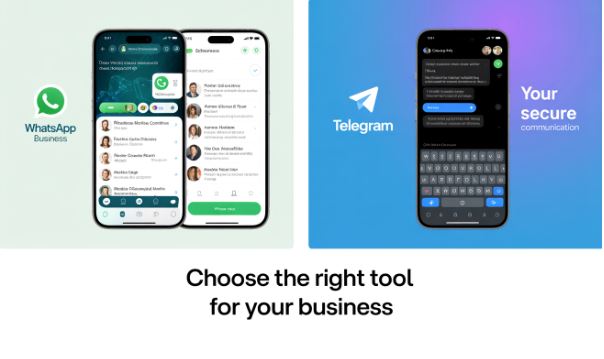
Compliance and Regulatory Factors
If your business is in one of the regulated industries, you need to ensure compliance. Compliance is the process of ensuring that your business is following the relevant laws and regulations, such as data privacy laws and anti-bribery laws.
This is why you need to understand the compliance requirements of both platforms to be aware of what you should be mindful of. If your business is operating in different regions, you must ensure that compliance extends to WhatsApp and Telegram.
Data Retention and Archiving
WhatsApp messages are usually stored on the user’s device, making it difficult to retrieve and retain them for auditing purposes. This means that if you are required to comply with regulations like HIPAA and FINRA, you are supposed to keep your communication for a specific period.
Telegram messages are kept in the cloud, which raises security concerns. If there is a breach on the Telegram servers, your messages may fall into the wrong hands.
In Conclusion
When considering whether to use WhatsApp or Telegram for their messaging, businesses need to consider several factors. From security to features, there are many aspects to consider. By reading and following our guide, it should be possible to choose an option that is suitable for your brand.


